


Step by step script coverage guide for screenwriters
You’ve poured months into your screenplay, but how do you know if it’s ready for producers? Many writers struggle to get clear, actionable feedback that actually improves their work. Professional script coverage offers the structured evaluation you need, breaking down your story into specific elements like character development, pacing, and marketability. This comprehensive guide walks you through every stage of the coverage process, from preparation through final revisions, so you can transform constructive criticism into a polished, industry-ready script.
Table of Contents
- Key takeaways
- Preparing for script coverage: what you need
- Step by step process of script coverage
- Common mistakes and troubleshooting in script coverage
- What to expect after receiving script coverage
- Explore expert screenplay coverage services
- FAQ
Key Takeaways
| Point | Details |
|---|---|
| Structured feedback elements | Coverage breaks the script into key components such as character development, pacing, and marketability to guide revisions. |
| Step by step process | The approach includes preparation, detailed analysis, and clear reporting to produce actionable feedback. |
| Improves industry chances | Using coverage helps refine your script and increase its appeal to producers and executives. |
| Submission pitfalls | Common mistakes include overlooking guidelines and skipping revision after feedback. |
Preparing for script coverage: what you need
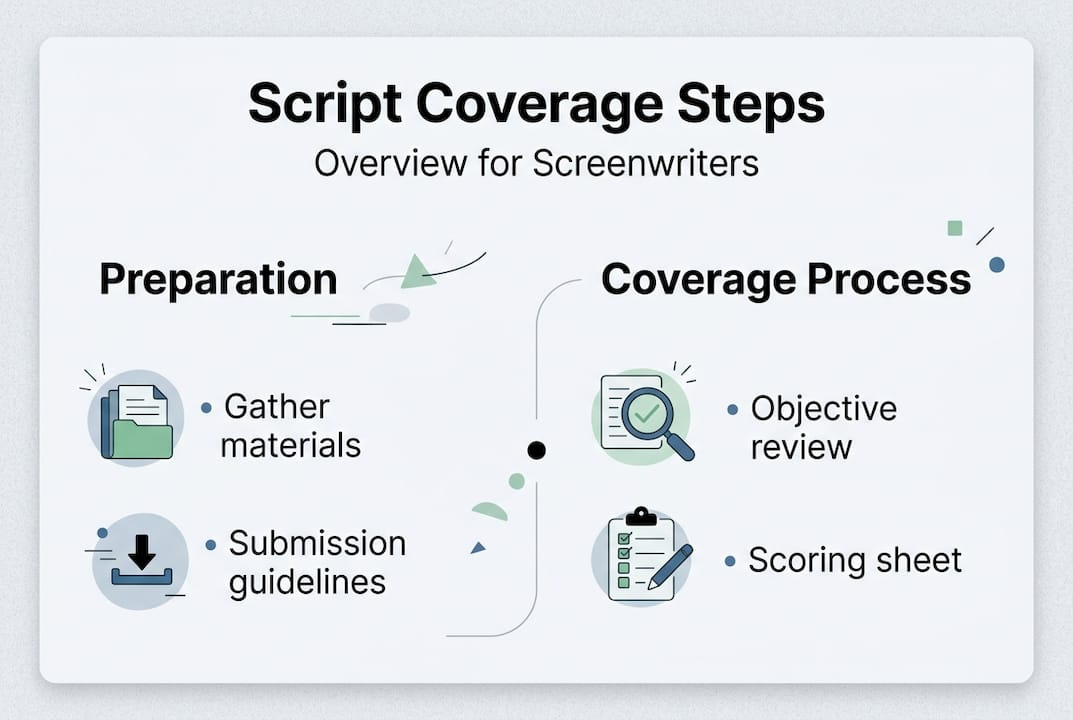
Before submitting your screenplay for professional evaluation, gather the essential materials that readers expect. Your final draft should be properly formatted in industry standard software like Final Draft or Celtx, with consistent scene headings and dialogue presentation. Include a compelling logline that captures your story’s core conflict in one sentence, plus a one-page synopsis that outlines major plot points and character arcs. Understanding industry standards for reviewing and evaluating scripts is essential before submitting for coverage.
Many coverage services request specific submission guidelines. Check whether they want PDFs or other file formats, page count limits, and genre classifications. Some readers appreciate brief context about your project’s development stage or target audience, though keep this to a single paragraph. Preparing these materials demonstrates professionalism and helps readers provide more relevant feedback.
Pro Tip: Create a brief writer’s statement explaining what you hope to learn from coverage. This helps readers focus on your specific concerns, whether that’s dialogue authenticity, pacing issues, or character motivation.
Here’s what you need versus why it matters:
| Required Material | Purpose in Coverage Process |
|---|---|
| Formatted screenplay | Enables proper evaluation of structure and pacing |
| Logline | Tests if core concept is clear and compelling |
| Synopsis | Provides story overview for context |
| Genre classification | Helps reader assess market positioning |
| Writer’s statement (optional) | Focuses feedback on specific concerns |
Common submission mistakes that undermine your coverage:
- Sending unformatted or improperly formatted scripts that distract from story evaluation
- Missing title page with contact information and registration details
- Submitting first drafts instead of revised, proofread versions
- Forgetting to include page numbers or proper scene headings
- Ignoring word count or page limits specified by the service
Proper preparation saves time and money. Readers can focus on storytelling craft rather than technical formatting issues. Take time to review your materials before submission, ensuring everything meets professional standards. This investment in preparation pays dividends in the quality and usefulness of feedback you receive.
Step by step process of script coverage
Professional script coverage breaks down the screenplay into story, character, and marketability components for evaluation. The process follows a systematic approach that transforms your manuscript into actionable feedback. Understanding each stage helps you interpret coverage reports and apply insights effectively.
Here’s how coverage readers work through your screenplay:
- Initial read through: The reader experiences your script as an audience would, noting emotional responses, pacing issues, and overall engagement. This first impression captures the story’s impact before analytical dissection begins.
- Scene by scene breakdown: Readers revisit the script systematically, examining structure, plot progression, and scene function. They identify which scenes advance the story versus which feel redundant or misplaced.
- Character analysis: Each major character gets evaluated for depth, motivation, arc completion, and distinctiveness. Readers assess whether characters drive the plot or simply react to events.
- Dialogue assessment: The reader examines whether dialogue sounds natural, reveals character, and advances the story. Overwritten exposition or on-the-nose dialogue gets flagged.
- Market evaluation: Coverage includes assessment of commercial viability, comparable films, and target audience. This helps you understand where your script fits in the current marketplace.
- Report compilation: All observations get organized into a structured document with summary, strengths, weaknesses, and recommendations.
Pro Tip: During your own read-throughs before submission, note where you feel bored or confused. These moments often align with reader feedback, giving you advance warning of problem areas.
Different coverage approaches serve different needs:
| Coverage Type | Depth | Best For | Typical Turnaround |
|---|---|---|---|
| Summary coverage | High-level overview, 2-3 pages | Quick market assessment | 3-5 days |
| Standard coverage | Detailed analysis, 4-6 pages | Comprehensive feedback | 1-2 weeks |
| Development notes | In-depth scene notes, 8+ pages | Major revisions | 2-3 weeks |
Objectivity separates professional coverage from feedback from friends or family. Readers focus on story mechanics, structure, and craft rather than personal taste. They might not love your genre but can still evaluate whether your script succeeds within genre conventions. This professional distance provides the honest assessment writers need for improvement.
The scoring or grading component quantifies various elements like concept, characters, dialogue, and structure. While numerical ratings vary by service, they offer quick reference points for comparing drafts or tracking improvement. Don’t fixate on scores alone. The written analysis contains the real value, explaining why elements succeed or fail.

Common mistakes and troubleshooting in script coverage
Even with quality coverage in hand, many writers misunderstand feedback or neglect to revamp scripts accordingly, reducing effectiveness. Recognizing these pitfalls helps you extract maximum value from professional evaluation and avoid wasting the investment.
Top mistakes that undermine coverage benefits:
- Dismissing negative feedback as subjective opinion rather than identifying patterns in criticism
- Focusing exclusively on grammar and typos while ignoring structural problems
- Misinterpreting reader suggestions as mandatory changes instead of diagnostic tools
- Rushing revisions immediately after receiving coverage without reflection time
- Cherry-picking only positive comments and ignoring weaknesses that need addressing
- Failing to ask clarifying questions when coverage notes seem unclear or contradictory
“The most common mistake writers make is treating coverage as validation rather than diagnosis. If you’re only looking for praise, you’re missing the point. Coverage identifies what’s not working so you can fix it, not to confirm what you already believe about your script.”
Confirming coverage quality protects your investment. Check reader credentials and industry experience before purchasing services. Legitimate coverage providers list reader backgrounds, often including development executives, producers, or working screenwriters. Sample reports demonstrate the depth and style of feedback you’ll receive. Avoid services offering suspiciously fast turnarounds or unusually cheap rates, as these often deliver superficial analysis.
When coverage notes seem ambiguous, reach out for clarification. Reputable services allow follow-up questions to ensure you understand the feedback. Ask specific questions like “Can you explain what you mean by the second act dragging?” or “Which scenes specifically felt redundant?” This dialogue transforms vague criticism into actionable direction.
Managing emotional response to criticism requires separating your identity from your work. Every professional screenwriter receives tough feedback. The difference between emerging and established writers often comes down to how they process criticism. Take 24 hours before reading coverage thoroughly. Initial defensiveness fades, allowing you to see valid points more clearly.
Iterative revision based on coverage creates measurable improvement. Don’t attempt to address every note in a single pass. Prioritize structural issues first, then character problems, then dialogue polish. Track changes between drafts so you can measure progress. Some writers find getting coverage on the same script from different readers valuable, as patterns in feedback reveal genuine weaknesses versus individual reader preference.
What to expect after receiving script coverage
Effective use of coverage results can lead to stronger scripts and better industry positioning. Understanding what’s in your report and how to apply it strategically transforms feedback into tangible screenplay improvement. Professional coverage follows consistent formats that make navigation and implementation straightforward.
Typical elements in a comprehensive coverage report:
- Executive summary providing overall assessment and recommendation (pass, consider, or recommend)
- Logline evaluation testing whether your concept is clear and marketable
- Synopsis section confirming the reader understood your story correctly
- Detailed strengths highlighting what’s working well in your screenplay
- Comprehensive weaknesses identifying specific problems with examples
- Character breakdowns for protagonist, antagonist, and major supporting roles
- Scene-by-scene notes flagging pacing issues, redundancies, or unclear moments
- Market analysis comparing your script to similar films and assessing commercial potential
- Overall grade or scoring across categories like concept, structure, characters, and dialogue
Prioritizing revisions prevents overwhelming yourself with too many simultaneous changes. Address fundamental story problems before polishing dialogue. If coverage identifies a weak second act or unclear protagonist goal, fix these structural issues first. Character inconsistencies and motivation problems come next. Save line-by-line dialogue improvements for final passes after larger elements work properly.
Timing matters for revision effectiveness. Resist the urge to rewrite immediately. Let coverage insights percolate for a few days while you outline your revision approach. Create a revision plan that tackles problems in logical order, working from macro to micro level. Some writers find breaking revisions into multiple passes less daunting than attempting everything at once.
Use coverage to improve storytelling fundamentals and character arcs systematically. If readers consistently note that your protagonist lacks agency, examine every scene where they appear. Do they make decisions that drive the plot, or do events happen to them? If pacing drags in act two, identify which scenes could be cut, combined, or shortened without losing essential story information.
Preparing for next steps depends on coverage outcomes. Strong coverage with minor notes suggests your script is ready for pitching or querying agents and managers. Consider getting additional coverage from another service to confirm the assessment. Mixed coverage indicating significant problems means prioritizing revisions before wider circulation. Don’t submit to industry contacts until you’ve addressed major weaknesses. Scripts only get one first impression with each producer or representative.
Resubmission timing varies by how extensive your revisions are. Minor changes might warrant new coverage within weeks. Major structural overhauls benefit from several months of revision before requesting fresh evaluation. Track your revision history so you can demonstrate growth if the same reader sees your script again. Professional development is iterative, with each coverage round building on previous feedback.
Explore expert screenplay coverage services
Now that you understand the complete coverage process, putting this knowledge into practice with professional support accelerates your screenplay development. Stonington Media specializes in honest, industry-grade script coverage that helps writers identify exactly what’s working and what needs refinement. Our readers bring extensive production experience, evaluating your work from a producer’s perspective rather than academic theory.

Explore our comprehensive story development resources to understand how professional feedback integrates into your overall writing process. We provide detailed coverage reports that break down structure, character arcs, dialogue, and marketability with specific examples from your script. Whether you’re preparing for pitch meetings or refining your craft, our coverage services deliver actionable insights that translate directly into screenplay improvement. Visit Stonington Media to see sample reports and discover how professional coverage can elevate your screenwriting.
FAQ
What is script coverage and why is it important?
Script coverage is a professional assessment of your screenplay that evaluates story structure, character development, dialogue quality, and market potential. It provides objective feedback identifying specific strengths and weaknesses, helping you refine your work before submitting to producers or agents. Coverage is essential for gaining the honest, industry-standard evaluation that friends and family cannot provide, giving you a competitive advantage in a crowded marketplace.
How long does it typically take to get script coverage feedback?
Turnaround time ranges from a few days to two weeks depending on the service, script length, and coverage depth you select. Summary coverage offering high-level assessment typically arrives faster than comprehensive development notes with scene-by-scene analysis. Planning your submission timeline accordingly helps you schedule revisions and meet industry deadlines without rushing the feedback process.
Can I request revisions or clarifications on my coverage report?
Many reputable coverage services allow follow-up questions to clarify feedback or expand on specific points. Effective communication with your reader maximizes the value of your coverage investment, ensuring you fully understand the analysis before beginning revisions. Ask specific questions about notes that seem unclear rather than requesting the reader reconsider their assessment.
How do I choose the right script coverage service?
Look for services with transparent reader credentials, ideally featuring development executives, producers, or working screenwriters with verifiable industry experience. Compare turnaround times, coverage depth, and pricing across multiple providers. Reading sample coverage reports helps you assess the quality and style of feedback before committing. Prioritize services offering clear communication and follow-up support over the cheapest options.
Recommended


Additional Reading:
- What is professional screenplay coverage (and do you actually need it?)
- What is professional screenplay coverage, really?
- How to Know If Your Screenplay Concept Is Strong Enough
- Why Most Second Acts Collapse (And How Coverage Detects It)
- How Professional Readers Evaluate Character Arcs
- Is Your Script Marketable?
Indexes: