


Effective business messaging: Essential types & strategies
TL;DR:
- Small businesses should use multiple messaging channels tailored to customer needs. Combining SMS for urgency and email for nurturing enhances engagement. Customer context and journey mapping are crucial for effective communication strategies.
Most small business owners invest real time and money into their products and services, then wonder why their messaging falls flat. The challenge isn’t always what you’re selling. It’s how, where, and when you’re communicating it. Choosing the wrong messaging channel means your best offers land in ignored inboxes, get buried in social feeds, or never reach prospects at the right moment. This guide covers the main types of business messaging channels available to small and medium-sized businesses, compares their strengths and weaknesses, and offers practical recommendations to improve engagement and lead generation. By the end, you’ll have a clear framework for building a messaging strategy that actually connects.
Table of Contents
- How to choose the right messaging channels
- SMS and email: The power duo for business messaging
- Team chat, DMs, and instant messaging: Fostering real-time collaboration
- Live chat and push notifications: Driving action and engagement
- Channel comparison and recommendations for SMBs
- What most guides miss: Customer context matters more than channel
- Enhance your business messaging with proven strategies
- Frequently asked questions
Key Takeaways
| Point | Details |
|---|---|
| Channel fit is crucial | Choosing messaging types based on urgency and content depth can maximize engagement and lead generation. |
| SMS delivers speed | SMS offers the highest open and response rates for urgent communications. |
| Email provides rich value | Email excels at nurturing leads with deep content and long-term ROI. |
| Omnichannel wins | Combining multiple messaging channels allows your business to reach customers in the way they prefer. |
| Adapt to customer context | Success hinges on tailoring messages and channels to specific customer journeys and preferences. |
How to choose the right messaging channels
Not all messaging channels are created equal. A channel that works brilliantly for a retail brand running flash sales may be completely wrong for a B2B service firm nurturing long-term relationships. Selecting the right channel starts with understanding what you need it to do.
There are five core criteria worth evaluating before committing to any channel.
Urgency refers to how quickly your message needs to reach someone and prompt a response. Time-sensitive promotions or appointment reminders demand channels with near-instant delivery and high open rates. Reach determines how many of your target contacts you can realistically engage through a given channel. Engagement depth measures whether the channel supports rich content like images, links, and long-form text, or whether it’s limited to short bursts. Audience responsiveness asks whether your specific customers actually use and respond on that platform. And analytics considers how well you can track opens, clicks, conversions, and revenue tied to each message.
The business messaging channels available to SMBs today include SMS and text messaging, email, team chat tools like Slack, social media direct messages, instant messaging apps like WhatsApp and Facebook Messenger, live chat, and push notifications. Each serves a distinct purpose, and the best strategies use several in combination.
Think of your messaging ecosystem as a layered system. Some channels handle urgency and speed. Others build depth and trust over time. A few exist purely for internal coordination. Knowing which layer each channel belongs to helps you assign the right message to the right medium.
Your marketing communications strategy should reflect the full customer journey, from first awareness through to purchase and retention. That means matching your channel choice to where the customer is in that journey, not just what’s easiest for you to send.
- SMS: Best for urgency, reminders, and short promotions
- Email: Best for nurturing, storytelling, and long-form content
- Team chat: Best for internal collaboration and project updates
- Social DMs: Best for relationship-building and quick support
- Instant messaging apps: Best for personal, conversational outreach
- Live chat: Best for real-time website engagement and conversion
- Push notifications: Best for re-engagement and time-sensitive triggers
Pro Tip: Don’t rely on a single channel. Businesses that blend two or more complementary channels, such as SMS for urgency and email for follow-up depth, consistently outperform those using a single-channel approach. This is the foundation of omnichannel effectiveness.
SMS and email: The power duo for business messaging
With clear criteria in hand, let’s see how the two most-used channels stack up.
SMS is arguably the most attention-grabbing channel in modern business communication. Messages arrive directly on a person’s phone and are almost always seen. SMS vs email statistics show that SMS achieves open rates between 90 and 98 percent compared to email’s 20 to 40 percent, and response rates of 45 percent versus just 6 percent for email. Those numbers are difficult to ignore.
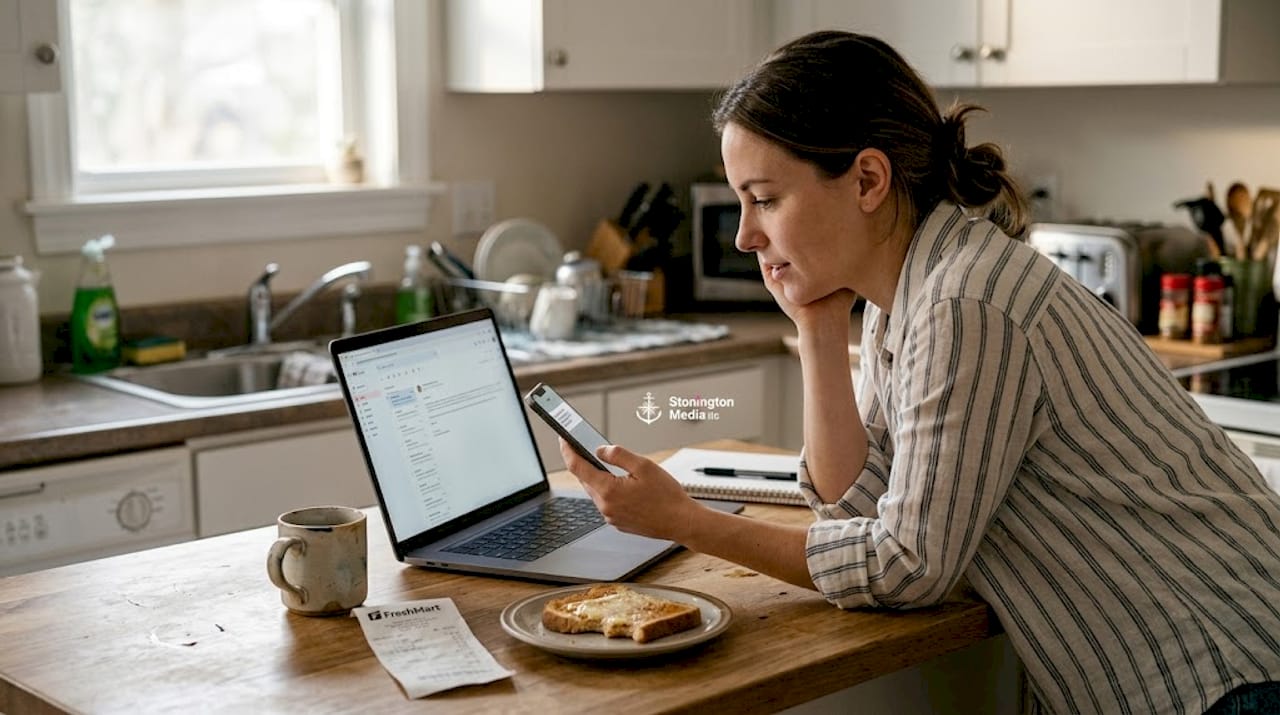
What SMS does exceptionally well is create immediacy. A limited-time discount, a same-day appointment reminder, or a flash sale notification lands with impact when sent via text. The format is short by necessity, which forces clarity. There’s no room for meandering copy. You say what you need to say, and you say it fast.
Email, on the other hand, operates in a different register entirely. It’s a slower burn, but a more powerful one for lead nurturing. Email allows you to tell a story, share detailed case studies, include multiple calls to action, and segment your audience with precision. The ROI on email marketing remains among the highest of any digital channel, largely because it scales so well with automation and targeting.
Consider cleaning your email list regularly to keep your open rates healthy and your deliverability strong. A bloated list with disengaged contacts drags down your metrics and can hurt your sender reputation. Choosing the right email platform options also shapes how effectively you can segment, automate, and track performance.
Here’s a direct comparison of how the two channels perform across key metrics:
| Feature | SMS | |
|---|---|---|
| Open rate | 90 to 98% | 20 to 40% |
| Response rate | 45% | 6% |
| Content depth | Low (short text) | High (rich content) |
| Best use case | Urgency, reminders | Nurturing, storytelling |
| Unsubscribe rate | Higher | Lower |
| Analytics | Basic | Advanced |
For SMBs, the practical application looks something like this:
- Use SMS to confirm appointments, send limited-time offers, and follow up on abandoned carts.
- Use email to deliver welcome sequences, educational content, and product deep-dives.
- Combine both when launching a campaign: send an email first with full context, then follow up with an SMS nudge for those who didn’t open.
When creating effective newsletters, focus on a single primary message per send. Trying to cover too many topics dilutes the impact and confuses the reader about what action to take.
Always respect opt-out preferences on both channels. Subscribers who feel their preferences are honored are far more likely to remain engaged long-term.
Pro Tip: Use SMS for short, urgent pushes that demand immediate attention. Reserve email for story-driven nurturing sequences that build trust and guide prospects through a decision. The two channels reinforce each other when used with intention.
Team chat, DMs, and instant messaging: Fostering real-time collaboration
After understanding the main external channels, it’s important to look at those that enable internal and customer-facing conversations.
Team chat platforms like Slack and Microsoft Teams have become the operational backbone of many small businesses. They replace long email threads with fast, organized conversations grouped by topic or project. Team members can share files, tag colleagues, set reminders, and track progress without leaving the platform. For businesses managing remote or hybrid teams, these tools are often essential.
Beyond internal use, platforms like WhatsApp and Facebook Messenger have grown into serious business communication tools. WhatsApp Business, for example, allows companies to set up automated greetings, quick replies, and product catalogs. It’s particularly effective for businesses with international customers or those in industries where personal, conversational service is expected.
Social media DMs, whether on Instagram, LinkedIn, or X, serve a slightly different function. They’re less about operational efficiency and more about relationship building. A quick, thoughtful response to a prospect’s question in a LinkedIn DM can open a conversation that no cold email ever would. Social DMs are also useful for following up with warm leads who’ve engaged with your content.
The team chat and DMs landscape spans a wide range of tools, each suited to different communication needs within and beyond your organization.
“Real-time messaging tools reduce decision-making friction and keep teams aligned. When customers experience that same responsiveness, it builds trust faster than any polished marketing campaign.”
Here’s a breakdown of how each tool category serves different needs:
- Slack and Teams: Organize internal communication by project, department, or topic; reduce email overload; integrate with other tools like CRMs and project management platforms
- WhatsApp and Messenger: Provide personal, conversational customer support; work well for appointment confirmations, order updates, and quick Q&A
- Social DMs: Build rapport with prospects and partners; respond to inbound interest; extend the reach of your content through direct conversation
Think carefully about your communication platforms and whether they’re integrated with your broader marketing communications strategy. A DM that goes unanswered for 48 hours sends a message too, just not the one you want.
The businesses that use these channels most effectively treat every message as a touchpoint in a larger relationship. They respond quickly, stay on brand, and use the conversational format to learn what their customers actually need.
Live chat and push notifications: Driving action and engagement
Finally, let’s focus on tools that generate instant interactions and measurable action.
Live chat sits directly on your website and intercepts visitors at the moment of highest intent. When someone is reading your service page or pricing information, a well-timed chat prompt can answer the question that was about to send them elsewhere. That’s a conversion opportunity that most businesses leave on the table.
Push notifications work differently. They reach users on their browsers or mobile devices even when they’re not actively on your site. A subscriber who browsed your products last week can receive a targeted reminder about a sale or a new arrival, pulling them back into the funnel without any action on their part.
The live chat and push notifications category represents two of the most action-oriented channels available to SMBs, and both reward intentional use.
| Channel | Key stat | Primary benefit |
|---|---|---|
| Live chat | Increases conversions by up to 40% | Immediate prospect engagement |
| Push notifications | Average click-through rate of 4 to 8% | Re-engagement and timely triggers |
| Live chat | Reduces bounce rate significantly | Keeps visitors on-site longer |
| Push notifications | Opt-in rates average 5 to 15% | Targeted, permission-based reach |
To get the most from live chat, consider these practices:
- Set up automated greetings that trigger after a visitor has spent 30 seconds or more on a key page
- Use chatbots for after-hours coverage so leads aren’t lost overnight
- Route conversations to the right team member based on the page the visitor is viewing
- Keep chat responses brief and action-oriented, directing visitors toward a clear next step
For push notifications, the same principle of relevance applies. Sending too many notifications trains users to ignore or block them. Instead, focus on push notification strategies that prioritize timing, personalization, and value.
- Segment your push subscribers by behavior, such as pages visited or products viewed
- Limit frequency to two or three notifications per week at most
- Test send times to find when your audience is most likely to engage
- Use urgency triggers like limited stock or expiring offers to prompt immediate action
Pro Tip: Automate the handoff between live chat and push notifications. A visitor who chats with your team can be invited to opt into push notifications for future updates, creating a continuous engagement loop that keeps your brand present without being intrusive. This kind of coordination is where marketing communications strategy becomes genuinely powerful.
Channel comparison and recommendations for SMBs
Bringing it all together, here’s how your options compare and what to do next.
The omnichannel recommendations from current research are clear: prioritize SMS for speed and urgency, email for depth and nurturing, and conversational channels for engagement and relationship-building. No single channel wins across all criteria.
| Channel | Open rate | Best for | Lead gen potential | Cost |
|---|---|---|---|---|
| SMS | 90 to 98% | Urgency, reminders | High | Medium |
| 20 to 40% | Nurturing, content | Very high | Low | |
| Team chat | Internal only | Collaboration | Low | Low |
| Social DMs | Variable | Relationship-building | Medium | Low |
| Instant messaging | High | Personal support | Medium | Low |
| Live chat | N/A | On-site conversion | High | Medium |
| Push notifications | 4 to 8% CTR | Re-engagement | Medium | Low |
For businesses focused on marketing communications that generate measurable leads, the priority stack looks like this: email for long-term nurturing, SMS for urgency and follow-up, live chat for on-site conversion, and social DMs for relationship development.
Here’s a practical plan for implementing an omnichannel messaging strategy:
- Audit your current channels. Identify which channels you’re actively using, which are underperforming, and where your audience is most responsive.
- Map channels to the customer journey. Assign each channel a specific role based on where it fits, whether that’s awareness, consideration, conversion, or retention.
- Set up your core two-channel foundation. Most SMBs should start with email and SMS as their primary external channels before adding complexity.
- Integrate your tools. Connect your CRM, email platform, and SMS tool so that customer data flows between them and triggers the right messages automatically.
- Measure and adjust. Track open rates, response rates, and conversions by channel. Cut what isn’t working and invest more in what is.
The goal isn’t to be everywhere. It’s to be in the right places, with the right message, at the right time.
What most guides miss: Customer context matters more than channel
These recommendations are powerful, but there’s a deeper insight most SMB guides overlook.
Business owners often obsess over channel mechanics, debating whether SMS or email will perform better, without first asking a more fundamental question: what does my customer actually need at this moment in their journey?
Channel selection is a downstream decision. The upstream decision is understanding context. A prospect who just discovered your business for the first time needs something entirely different from a returning customer who hasn’t bought in six months. Sending the same message through the same channel to both of them is a missed opportunity regardless of how strong the channel’s open rate is.
The most effective messaging strategies we’ve seen aren’t built around channel preference. They’re built around customer journey touchpoints. Each touchpoint has a specific emotional state attached to it, and the message that resonates is the one that meets that emotional state honestly.
If you want to see real improvement in your engagement and lead generation, start by mapping where your customers are in their decision-making process before you decide which channel to use. This is the insight that clear communication strategies consistently reinforce: clarity comes from understanding your audience first, then choosing your medium.
Channel optimization is a tool. Customer context is the strategy.
Enhance your business messaging with proven strategies
If you’re ready to take your messaging strategy to the next level, the right resources make the difference between guessing and growing.
Stonington Media helps small and medium-sized businesses close the gap between what they offer and how clearly they communicate it. Whether you need a complete website messaging guide to sharpen your site copy, a framework for clear messaging storytelling that builds trust and drives conversions, or guidance on selecting the right email marketing platforms for your business, these resources are built specifically for businesses like yours. Strong messaging isn’t a luxury. It’s the foundation of every lead you generate and every customer you keep.
Frequently asked questions
Which business messaging type delivers the best response rates?
SMS generally delivers the highest response rates at around 45 percent, making it ideal for urgent communication, while email excels at nurturing leads and delivering in-depth content over time.
Should small businesses use multiple messaging channels?
Yes, combining SMS, email, and instant messaging increases engagement by allowing you to meet customers where they are. The omnichannel approach adapts to both urgent and nurturing communication needs.
How can live chat and push notifications help with lead generation?
Live chat engages website visitors in real time, reducing bounce and increasing conversion, while push notifications re-engage past visitors with timely, targeted messages that drive action.
Is team chat suitable for client communication or only internal use?
Team chat tools like Slack and Teams are primarily designed for internal collaboration, but they can also support client-facing communication for real-time project updates, quick support, and shared workspaces.
Recommended


Additional Reading:
- What is professional screenplay coverage (and do you actually need it?)
- What is professional screenplay coverage, really?
- How to Know If Your Screenplay Concept Is Strong Enough
- Why Most Second Acts Collapse (And How Coverage Detects It)
- How Professional Readers Evaluate Character Arcs
- Is Your Script Marketable?
Indexes: