

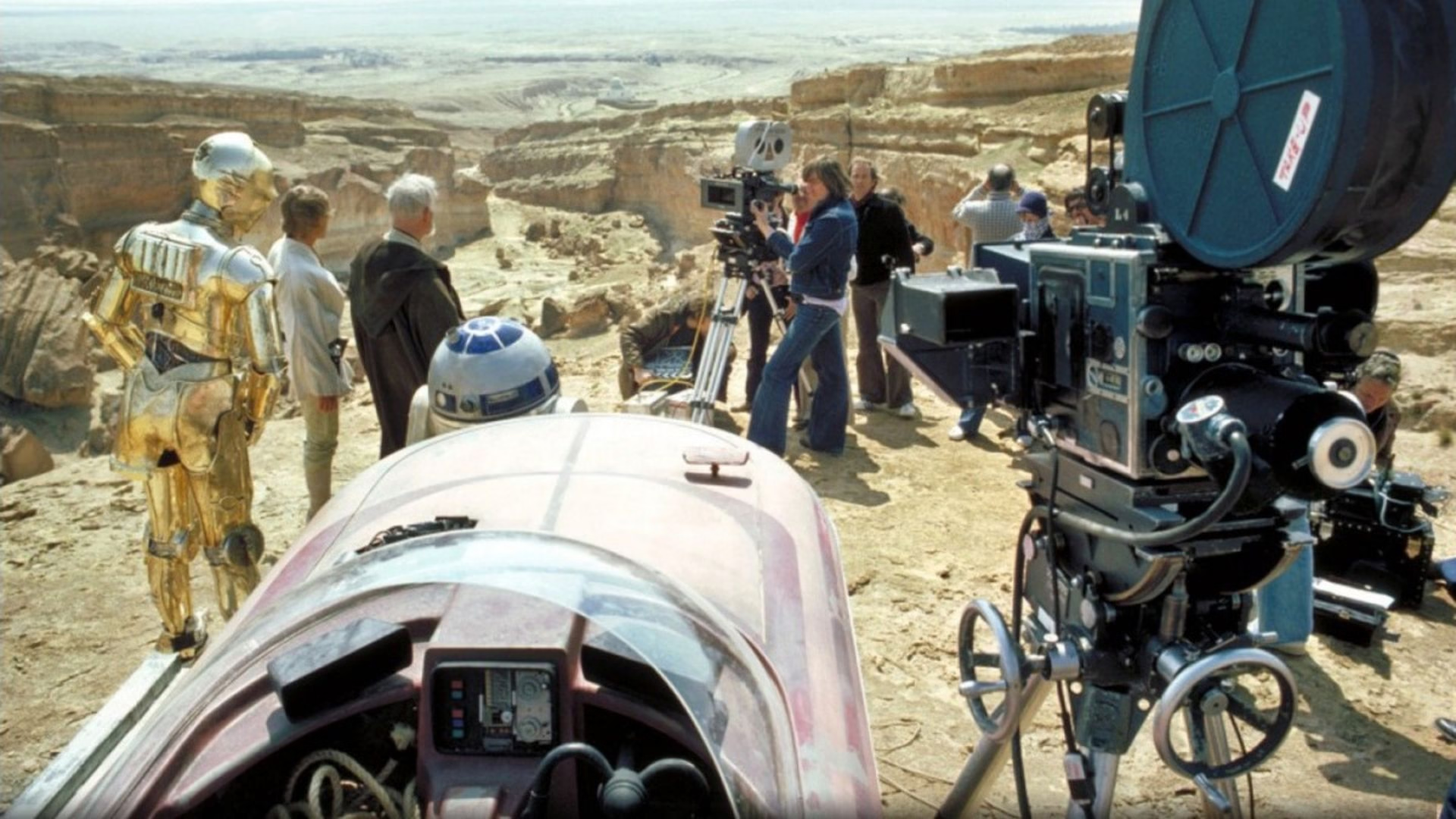
Story structure, examined: the hero’s journey and Star Wars
The Hero’s Journey has a weird reputation.
Some people treat it like scripture. Others blame it for every hollow blockbuster they’ve sat through since the 1990s. Most writers meet it early, usually in a simplified form, and then spend years either leaning on it too hard or trying to pretend they’ve outgrown it.
What often gets lost in that back and forth is a basic question. What was this framework actually meant to do?
Like most story models, the Hero’s Journey isn’t universal. It works well for certain kinds of stories and not so well for others. Once you stop treating it like a rulebook, that becomes easier to see. And honestly, easier to live with.
This isn’t an attempt to defend the Hero’s Journey or tear it down. It’s an attempt to look at what it’s good at, why it keeps resurfacing in development conversations, and why it fits stories like Star Wars as cleanly as it does.
What the Hero’s Journey Focuses On
The Hero’s Journey isn’t really about psychology. It’s about meaning.
Some frameworks track how characters adjust internally, moment by moment. This one pushes change outward. Doubt turns into trials. Moral tension turns into visible choices. Growth shows up as movement through a world that keeps asking the character to step forward, or turn back.
The character doesn’t simply evolve. They’re initiated.
That initiation matters. The framework is built to make personal change visible at scale. The world reacts. Allies and enemies feel less like people and more like forces. Progress happens in stages because the shift itself is meant to feel deliberate, even ceremonial.
That’s why these stories often feel larger than the character at the center. The point isn’t just who they become. It’s what that transformation stands for.
Why Star Wars Fits So Cleanly
Star Wars works as an example because it doesn’t push against the framework. It leans into it.
Luke Skywalker doesn’t start out especially complicated. He starts unfinished. Restless. A little bored. The film isn’t interested in dissecting his inner life. It wants to move him from one state of being to another in a way that feels earned and clear.
Each major turn lines up with a symbolic shift. Leaving home. Crossing into danger. Losing guides. Facing power. Choosing a side. The emotional texture is simple. What matters is what each step represents.
Even the galaxy participates in the change. This isn’t a private journey. It’s a mythic one. That scale isn’t an accident. It’s exactly what this framework is good at supporting.
Symbol Over Interior Detail
One of the main differences between the Hero’s Journey and more character-driven approaches is where attention goes.
The Hero’s Journey cares more about role than interior nuance. Characters function inside a moral landscape. Their choices matter because of what they align with, not because of how subtly they shift over time.
That doesn’t make the framework shallow. It makes it directional. The audience isn’t meant to follow every emotional adjustment. They’re meant to know what the hero represents by the end.
That clarity is powerful. It’s also limiting.
Why These Stories Feel Epic So Easily
Stories shaped by the Hero’s Journey often feel big even when the plot itself is simple. The scale comes from symbolism, not complexity.
A trial isn’t just an obstacle. It’s a test of identity. Loss isn’t just painful. It’s a sacrifice. Victory isn’t just winning. It’s alignment with something larger than the self.
That’s why this structure works especially well for myths, franchises, and stories that want to feel foundational. They don’t just conclude. They establish something.
Where the Framework Breaks Down
The Hero’s Journey doesn’t love ambiguity.
When a story is intimate, unresolved, or psychologically messy, this framework can smooth out the very things that make it interesting. Writers can hit every recognizable stage and still end up with characters who feel distant or preprogrammed.
When that happens, it’s rarely a craft failure. It’s a mismatch. The tool is being asked to solve the wrong problem.
How It’s Used in Development
Part of the Hero’s Journey’s staying power comes from how easy it is to talk about.
In development settings, it gives people a shared way to discuss scale, stakes, and intention. It helps answer questions like whether a story wants to feel mythic, aspirational, or foundational.
That makes it especially useful for franchise conversations and IP-driven projects, where meaning often matters as much as character detail.
How It Sits Next to Other Structures
The Hero’s Journey doesn’t replace three-act structure or pacing models. It answers a different question.
Other systems help organize time, escalation, and cause and effect. This one helps clarify what the journey is meant to mean.
Once that distinction clicks, the framework stops feeling like an obligation. It becomes a choice.
Closing Thoughts
The Hero’s Journey sticks around because it still does something stories need. It gives shape to transformation at a mythic level.
It won’t help you write subtle characters or ambiguous endings. What it can do is make change feel purposeful and shared. Used with intent, it’s effective. Used everywhere, it’s blunt.
Like any story tool, its value depends on the story you’re actually trying to tell.
Next in the series:
Story Structure, Examined: Three-Act Structure (Why It Refuses to Die)
image: Lucasfilm LTD/20th Century Fox



Additional Reading:
- What is professional screenplay coverage (and do you actually need it?)
- What is professional screenplay coverage, really?
- How to Know If Your Screenplay Concept Is Strong Enough
- Why Most Second Acts Collapse (And How Coverage Detects It)
- How Professional Readers Evaluate Character Arcs
- Is Your Script Marketable?
Indexes: