

Story structure, examined: ensemble storytelling (and what happens when no one carries it alone)
A lot of structural models assume there’s one center.
One protagonist. One arc. One person who changes while the rest of the world reacts.
Ensemble storytelling spreads that weight around.
Instead of one central journey, the energy moves between characters. The focus shifts. The emotional charge rotates. The story doesn’t belong to a single person. It belongs to a group.
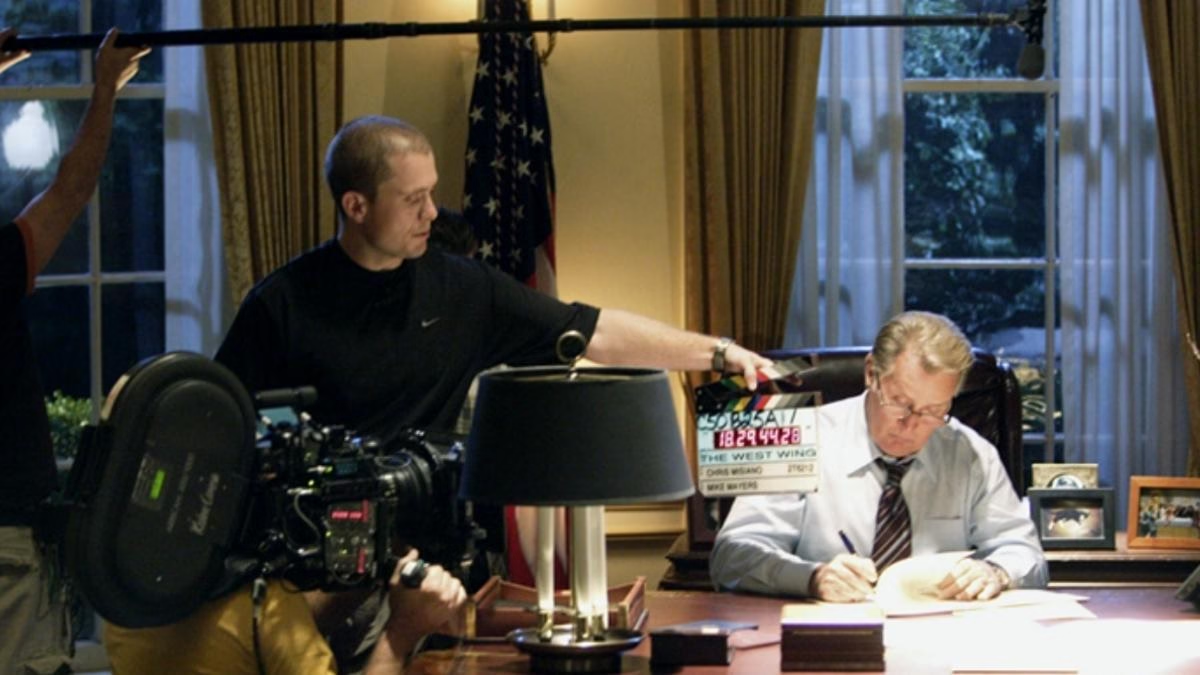
If you want to see that clearly on television, The West Wing is a strong example.
What ensemble structure is really doing
In an ensemble, there isn’t one main engine driving everything.
There are several.
Each character carries their own goals, their own pressures, their own blind spots. An episode might lean toward one of them, but the others don’t freeze in place. Their arcs keep moving, sometimes quietly in the background, sometimes in direct collision.
The structure isn’t one clean rise and fall. It’s convergence.
Multiple storylines unfold at the same time. They intersect. They influence each other. By the end of the episode, what matters isn’t just what one character achieved. It’s how the group has shifted.
I’ve always thought of ensemble structure as a kind of relay. The baton keeps passing, but the race never stops.
How The West Wing handles it
At first glance, President Bartlet looks like the protagonist. He’s the President, after all.
But week to week, the spotlight moves.
One episode might center on Josh as he makes a political gamble that could backfire. Another leans into C.J. managing a press disaster. Then you’ll see Toby wrestling with a moral decision, or Sam shaping language that could survive public scrutiny.
The show doesn’t drop the other characters when one steps forward. It cuts between offices. Conversations overlap. Decisions in one corner of the building ripple outward.
The administration itself becomes the through-line.
That’s the heart of ensemble structure. The story lives in the collective, not just in one person’s transformation.
Where the tension comes from
In a single-protagonist story, tension often hinges on whether one person succeeds.
In an ensemble, tension often hinges on alignment.
Will they agree?
Will priorities clash?
Can their values survive the compromise required?
Conflict still exists, but it’s spread out. Instead of one giant confrontation, you get layered pressures. Policy disagreements. Ethical friction. Strategic trade-offs.
Theme becomes the glue.
An episode of The West Wing might revolve around responsibility or loyalty. Each character engages that theme differently. By the end, the episode feels unified even though the focus has rotated several times.
That thematic consistency replaces the single hero’s arc.
The structural challenge
Ensemble storytelling requires balance.
If one character dominates too long, the show stops feeling like an ensemble. If the storylines never meaningfully touch, the episode can feel scattered.
The key is rhythm.
You shift focus before the energy dips. You let decisions in one storyline complicate another. You design scenes that carry more than one pressure at once.
When it works, it doesn’t feel like separate mini-stories stitched together. It feels like a living organism. Messy, coordinated, always in motion.
The West Wing does this particularly well. The walk-and-talk scenes aren’t just stylistic. They allow multiple conversations, tensions, and agendas to advance in the same stretch of hallway.
That’s not flair. That’s structure.
How ensemble structure fits with other models
Three-act structure can still shape an ensemble episode. So can five-act escalation.
The difference is where you look.
The turning points don’t belong to one character. They ripple across several. The midpoint might change the direction of the entire team. The ending might resolve one arc while complicating another.
You’re still tracking movement. You’re just tracking it across multiple lives at once.
Ensemble structure doesn’t discard traditional frameworks. It stretches them.
Closing
In The West Wing, the presidency matters.
But the presidency alone isn’t the story.
The story is the team. The tension between ideals and reality. The way one decision echoes down the hall and into the next office.
Ensemble storytelling works when no one carries the narrative alone.
The story holds because the group holds.
And when the group shifts, everything shifts with it.
Next in the series: horror structure.
Ensemble storytelling distributes pressure across multiple lives. Horror often does the opposite. It narrows the lens. It isolates. It traps. We’ll look at how horror builds dread differently from other genres, using The Shining as a lens, and examine what changes when atmosphere, not just escalation, becomes the primary engine.



Additional Reading:
- What is professional screenplay coverage (and do you actually need it?)
- What is professional screenplay coverage, really?
- How to Know If Your Screenplay Concept Is Strong Enough
- Why Most Second Acts Collapse (And How Coverage Detects It)
- How Professional Readers Evaluate Character Arcs
- Is Your Script Marketable?
Indexes: