

Story structure, examined: beat sheets
Beat sheets didn’t come from theory. They came from nerves.
The kind of nerves you get when a story starts to drift. When the middle goes soft. When you can feel the audience leaning back instead of leaning in. Beat sheets exist because timing matters, and writers need a way to keep track of momentum without guessing.
If you want a clear, practical example of what beat sheets do well, look at Die Hard.
Not because it’s flashy. Because it’s readable.
What a beat sheet is really tracking
A beat sheet isn’t about theme. It isn’t about psychology either.
It tracks audience experience. Each beat marks a shift. New information. A change in pressure. A small win followed by a bigger problem. Beat sheets care less about what something means and more about when it happens and how it lands.
I’ve always thought of them as a timing map. They don’t tell you where to go. They tell you when the audience expects something to move.
That’s why they show up so often in genre storytelling, where pacing isn’t optional.
Why Die Hard makes the beats easy to see
Die Hard works as an example because nothing is hiding.
The premise is simple. One location. One threat. One protagonist who can’t leave. Because the setup is clean, the beats stand out. When something changes, you feel it. When pressure increases, it’s obvious.
If a major beat arrived late in this movie, the whole thing would wobble. That’s what makes it useful here. You can see the structure doing its job.
Early beats: orientation and commitment
The opening of Die Hard moves quickly, but it isn’t rushed.
We meet John McClane. We understand the strain in his personal life. We get a sense of the building as both setting and problem. When the inciting incident hits, it doesn’t drift in. It changes the situation immediately.
This is where beat sheets earn their keep. They help make sure the audience is oriented and invested before the story asks for sustained attention.
Middle beats: escalation and reset
The middle of Die Hard isn’t just action piled on action.
Each sequence raises pressure, pays off something earlier, and creates a new complication. Even the quieter moments exist to let tension reset so the next beat has room to hit.
This is one of the main reasons writers turn to beat sheets. Middles are where stories tend to sag. Beats give shape to that stretch without demanding some big thematic breakthrough.
They keep the story awake.
Late beats: compression and payoff
As the film heads toward its ending, the beats tighten.
Options disappear. Space shrinks. Consequences stick. There’s less distance between moments because the story has earned that pace. Payoffs arrive faster because the setup work is already done.
Beat sheets help manage this compression. They give writers a way to control energy as the story closes in on itself.
What beat sheets are especially good at
Beat sheets are strong tools for pacing and escalation.
They help writers avoid dead zones, manage attention, and shape stories where timing really matters. Action films, thrillers, high-concept premises. Anywhere the audience needs to stay engaged moment to moment.
Where beat sheets start to struggle
Beat sheets don’t create meaning.
They won’t deepen a character. They won’t solve a thematic problem. They don’t help much with interior change or stories built on mood rather than momentum.
You can hit every beat and still end up with something hollow. When that happens, the problem usually isn’t the beats. It’s that they’re being asked to do more than they’re meant to do.
How beat sheets fit with other frameworks
Beat sheets layer easily onto three-act structure. They can also sit on top of models like the Story Circle or the Hero’s Journey.
Each tool answers a different question.
Three acts organize time.
Story circles track change.
Beat sheets manage attention.
Used together, they cover more ground than any one framework can on its own.
Closing thoughts
Beat sheets work best when writers know why they’re using them.
They’re a way to keep a story alive moment to moment. They aren’t a replacement for intent, character, or meaning. When they’re used deliberately, they do their job quietly and well.
That’s why they’ve lasted.
Next in the series:
Story structure, examined: Freytag’s pyramid (why tension has a shape)
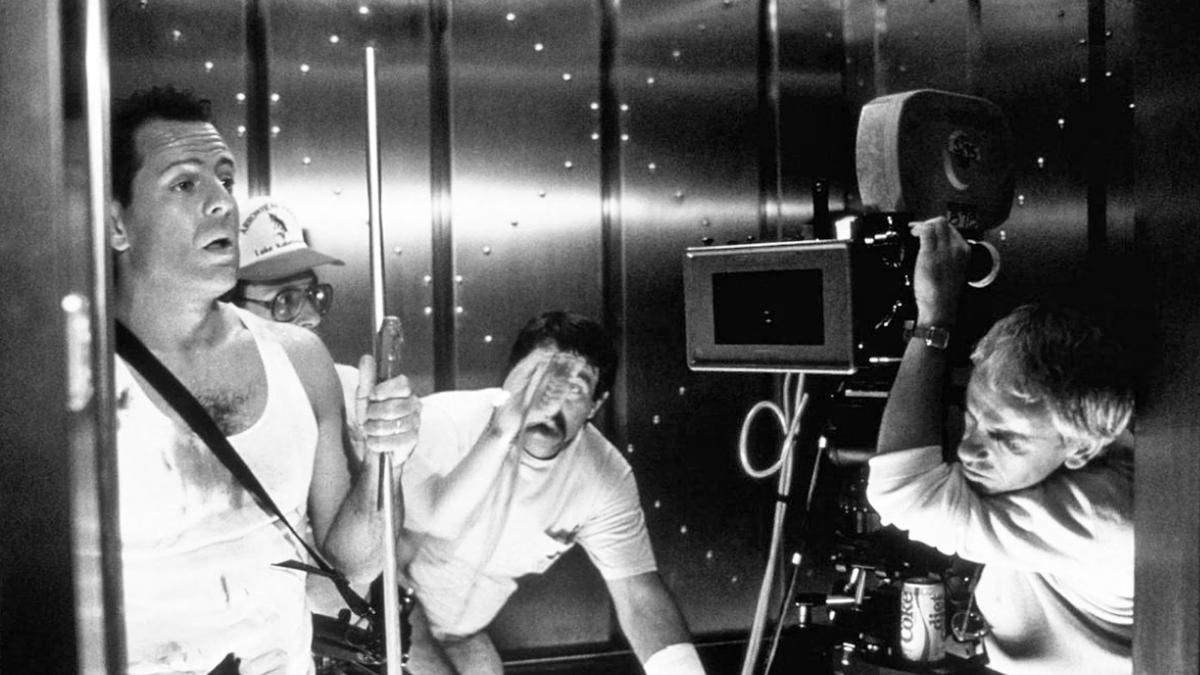
image: 20th Century Fox



Additional Reading:
- What is professional screenplay coverage (and do you actually need it?)
- What is professional screenplay coverage, really?
- How to Know If Your Screenplay Concept Is Strong Enough
- Why Most Second Acts Collapse (And How Coverage Detects It)
- How Professional Readers Evaluate Character Arcs
- Is Your Script Marketable?
Indexes: