


Screenplay coverage workflow guide for writers in 2026
Getting your screenplay read and evaluated by industry professionals can feel like navigating a maze without a map. Many screenwriters struggle to receive meaningful feedback that actually improves their scripts and enhances marketability. Understanding the screenplay coverage workflow demystifies this process, showing you exactly how to prepare, submit, and leverage professional evaluations to refine your narrative structure, strengthen character development, and position your script for success in a competitive industry.
Table of Contents
- Understanding Screenplay Coverage And Its Role
- Preparing Your Screenplay For Coverage Submission
- Navigating The Screenplay Coverage Process Step By Step
- Common Mistakes And How To Get The Most From Coverage Feedback
- Explore Expert Screenplay Coverage Services
Key takeaways
| Point | Details |
|---|---|
| Coverage reports follow a standard format | Every report includes a logline, synopsis, and detailed evaluation of your script’s strengths and weaknesses. |
| Industry professionals rely on coverage for quick assessments | Agents, managers, and producers use coverage to efficiently evaluate script potential before committing time. |
| Ratings guide marketability decisions | The Recommend, Consider, or Pass rating helps determine if your script is ready for industry submission. |
| Writers gain targeted feedback | Coverage identifies specific issues in plot, characters, themes, and structure you can address through revisions. |
| Understanding the workflow maximizes value | Knowing how coverage works helps you prepare better and use feedback more effectively. |
Understanding screenplay coverage and its role
Script coverage is an objective report analyzing a screenplay’s strengths and weaknesses, used by industry professionals to evaluate scripts efficiently. This tool has become essential in film and television development, serving as a gatekeeper that helps decision-makers identify promising material without reading every submitted script cover to cover.
Multiple stakeholders rely on coverage throughout the industry. Agents use it to assess whether a writer’s work merits representation. Managers depend on coverage to guide client development. Producers and studio executives utilize these reports to make informed decisions about which projects deserve further consideration and investment.
The primary benefit of coverage is time efficiency. Reading a comprehensive script takes hours, but reviewing a well-written coverage report takes minutes. This streamlined approach allows busy professionals to evaluate dozens of scripts quickly, focusing their reading time only on the most promising candidates.
For writers, professional screenplay coverage delivers targeted feedback on critical elements:
- Plot structure and narrative coherence
- Character development and arc progression
- Thematic clarity and resonance
- Dialogue quality and authenticity
- Pacing and momentum
- Marketability and commercial potential
Every coverage report includes standard components. The logline distills your story into one compelling sentence. The synopsis summarizes your plot in one to two pages. The evaluation section provides detailed comments analyzing your script’s execution across multiple dimensions.
The rating system typically uses three tiers: Recommend (exceptional scripts worth pursuing), Consider (promising material needing revisions), and Pass (scripts requiring substantial work before resubmission). Understanding industry standards through coverage helps writers align their work with professional expectations, improving storytelling craft and marketability simultaneously.
Preparing your screenplay for coverage submission
Before submitting your script for professional evaluation, proper preparation ensures you receive the most useful and actionable feedback possible. A polished, professionally formatted screenplay signals competence and makes the reader’s job easier, resulting in more focused, substantive commentary.
Your script must adhere to industry formatting standards before submission. This means proper margin settings, correct font usage (Courier 12pt), appropriate scene heading formats, and standard page layout. Deviations from these conventions distract readers and suggest amateur work, potentially biasing the evaluation before the story itself is assessed.

Double-check your manuscript for technical errors. Spelling mistakes, grammar issues, and inconsistent character names undermine your credibility and waste coverage focusing on surface problems rather than substantive storytelling issues. Run spell check, read your script aloud, and consider having a trusted colleague review it before submission.
Many services request a brief cover letter or logline when you submit. This contextual information helps readers understand your intentions and genre positioning. Keep it concise and professional, framing what makes your story unique without overpromising or underselling.
Include clear identification on your title page: script title, your name, contact information, and draft date. This professional touch aids processing and demonstrates organization. If you’ve registered your script with the Writers Guild or copyright office, you may note that as well.
Pro Tip: Always submit scripts in PDF format unless the service specifies otherwise, as this preserves your formatting across different devices and operating systems.
Familiarize yourself with the specific service’s rating system and report format beforehand. Understanding the process helps you interpret feedback more effectively when it arrives. Review sample coverage reports if available, noting how comments are structured and what level of detail to expect. This preparation also helps you evaluate whether the script is marketable in its current state or needs additional work before professional evaluation.
Navigating the screenplay coverage process step by step
Once your screenplay is polished and ready, understanding the workflow from submission to receiving your report helps set realistic expectations and maximize the value you extract from professional evaluation.
- Select and order your coverage service. Research providers based on their expertise, turnaround time, and pricing. Some specialize in specific genres or offer different tiers of feedback depth. Choose a service aligned with your needs and budget.
- Submit your script and required information. Upload your PDF screenplay through the service’s portal along with any requested details like logline, genre, or target audience. Confirm the agreed turnaround time and total cost before finalizing your order.
- Professional reader evaluates your screenplay. An experienced industry reader, often with background as a development executive, agent, or producer, reads your entire script. They analyze it against professional standards, assessing storytelling craft, structure, character development, and commercial viability.
- Coverage report is compiled. The reader creates a comprehensive document following the standard format, writing a logline that captures your concept, a synopsis summarizing your plot, and detailed evaluation comments addressing strengths and weaknesses across multiple dimensions.
- You receive and review the completed report. Most services deliver digitally via email or download portal. The report arrives as a formatted document, typically PDF, containing all coverage components plus the final rating.
- Optional follow-up or clarification. Some services allow brief follow-up questions if specific feedback needs clarification, though extensive back-and-forth usually isn’t included in basic coverage fees.
Coverage reports include these standard sections, each serving a distinct purpose:
| Report Section | Purpose |
|---|---|
| Logline | Distills your story into one compelling sentence for quick concept assessment |
| Synopsis | Summarizes plot in 1-2 pages so readers understand story without reading the full script |
| Comments/Evaluation | Provides detailed analysis of plot, characters, dialogue, structure, and themes |
| Rating | Offers overall recommendation (Recommend, Consider, Pass) indicating script readiness |
Typical turnaround time ranges from one to two weeks, though rush services may deliver faster for additional fees. The rating system indicates where your script stands: Recommend means it’s industry-ready and should be pursued, Consider suggests strong potential with revisions needed, and Pass indicates substantial reworking required before the script is competitive.
Pro Tip: When reading your coverage report, focus first on recurring themes in the feedback rather than isolated comments, as patterns reveal the most critical issues to address in revisions.
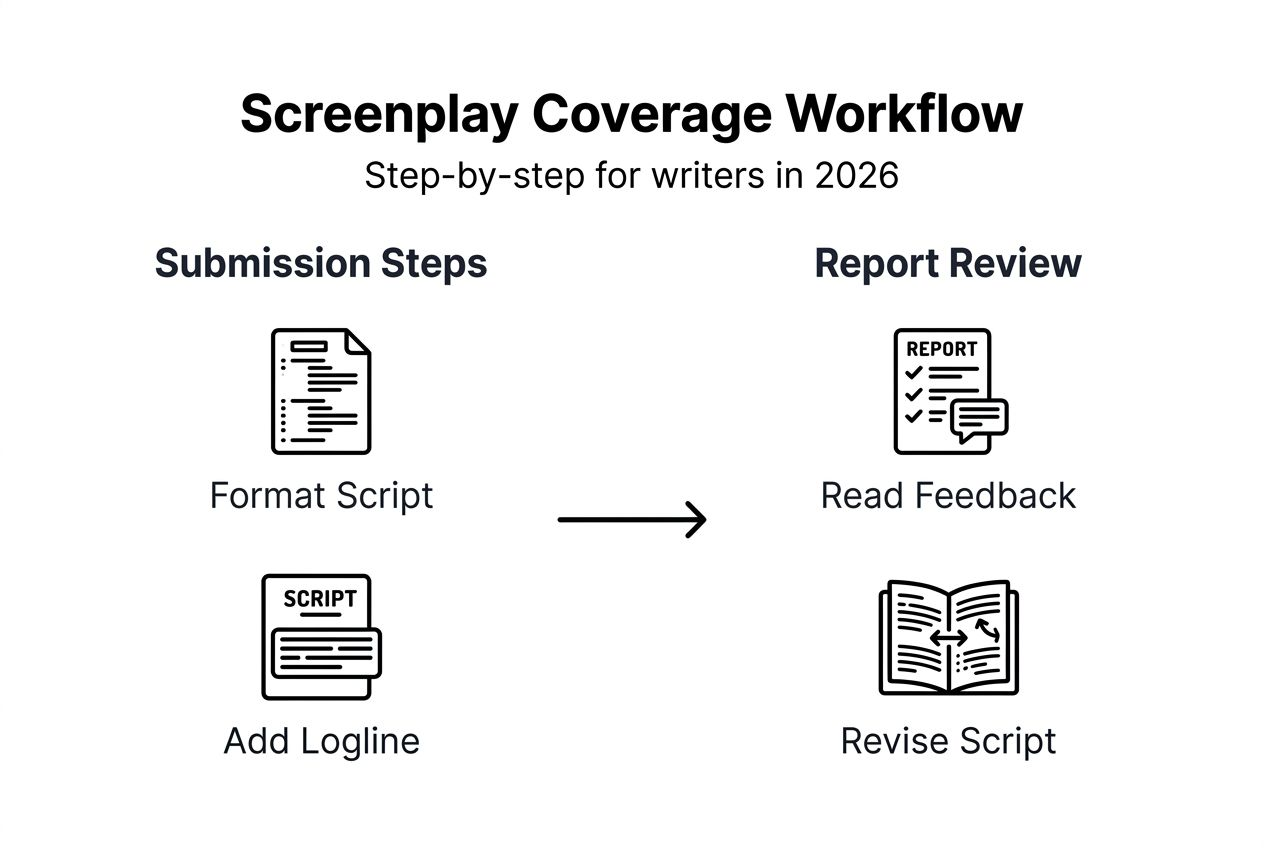
For comprehensive evaluation aligned with industry standards, explore screenplay coverage services that provide detailed, actionable feedback from experienced professionals.
Common mistakes and how to get the most from coverage feedback
Receiving professional screenplay coverage is valuable, but many writers inadvertently diminish its impact through predictable missteps. Recognizing these pitfalls and approaching feedback strategically transforms coverage from a simple evaluation into a powerful development tool.
One frequent mistake is dismissing constructive criticism out of frustration or wounded pride. Your script represents months or years of creative effort, making negative feedback emotionally difficult. However, professional readers evaluate countless scripts and recognize patterns that undermine storytelling effectiveness. Their insights reflect industry reality, not personal attacks.
Another common error is expecting coverage to rewrite your script or solve every problem. Coverage is an evaluative tool, not a script doctoring service. Readers identify issues and suggest general improvement directions, but you must do the creative problem-solving. Waiting for coverage to provide scene-by-scene solutions leads to disappointment and wasted opportunity.
Submitting unpolished or incomplete drafts generates less useful feedback. When readers spend coverage highlighting basic formatting errors, spelling mistakes, or incomplete character arcs, they can’t delve into nuanced storytelling analysis. Always submit your best possible draft to receive substantive, actionable commentary on your actual storytelling rather than surface issues.
To maximize coverage value, create a prioritized revision plan based on the comments. Not all feedback carries equal weight. If multiple issues are identified, determine which changes will have the greatest impact on your story’s effectiveness and marketability. Address structural problems before polishing dialogue, fix character motivation issues before tweaking individual scenes.
Use ratings as guidance rather than final verdicts. A Consider rating doesn’t mean your script is doomed, it means targeted revisions can elevate it to competitive status. Even a Pass rating offers valuable insights about fundamental issues you can address. Coverage helps identify problems before you submit to agents or producers, saving time and improving success chances significantly.
Coverage is a tool to guide your improvements, not a judgment on your creativity or worth as a writer.
Approach feedback with professional detachment. Step away from your coverage report for a day or two after reading it, allowing initial emotional reactions to settle. Return with fresh perspective, noting which comments resonate and which might reflect subjective preference rather than craft issues.
Consider ordering professional screenplay coverage from multiple sources if budget allows. Different readers may emphasize different aspects, and recurring feedback across multiple reports identifies your script’s most critical issues with greater certainty.
Explore expert screenplay coverage services
Now that you understand how screenplay coverage works and how to leverage it effectively, accessing professional evaluation becomes your next step toward strengthening your script and enhancing its marketability. Quality coverage provides the honest, industry-grade feedback necessary to refine narrative structure, deepen character development, and position your screenplay competitively.

Stonington Media specializes in comprehensive screenplay coverage aligned with film and television industry standards. Their reports deliver detailed summaries, thorough analysis, and actionable feedback from experienced professionals who understand what producers and executives seek in successful scripts. You receive targeted insights on story structure, character arcs, thematic resonance, and commercial viability, all presented in the standard format industry gatekeepers recognize and trust. Whether you need a script marketability analysis to assess commercial potential, want to understand essential screenplay elements better, or seek clarity on professional coverage benefits, expert evaluation guides your development process with precision and authority.
FAQ
What is included in a typical screenplay coverage report?
Coverage reports usually include a logline, synopsis, comments and evaluation, and a rating to assess the screenplay’s strengths and weaknesses. This standardized format helps writers quickly grasp feedback while enabling producers to evaluate scripts efficiently without reading every submission in full.
How long does it usually take to get screenplay coverage?
Most professional coverage services deliver reports within one to two weeks after script submission. Expedited options may be available for writers with urgent deadlines, though these typically cost more than standard turnaround services.
How can writers best use feedback from screenplay coverage?
Writers should identify key strengths and weaknesses highlighted in coverage, then prioritize revisions focusing on plot clarity, character arcs, and pacing. Approach feedback objectively and consider professional insights for realistic improvements rather than dismissing criticism or expecting coverage to rewrite your script. Focus on recurring themes across the evaluation, as patterns reveal the most critical issues professional readers identify in your storytelling.
What does a Pass rating mean for my screenplay?
A Pass rating indicates your script requires substantial revisions before it’s competitive for industry consideration. This doesn’t mean your concept is flawed or your writing lacks potential. Rather, it signals fundamental issues in execution, structure, character development, or marketability that need addressing. Use the detailed comments to understand specific problems and create a revision plan.
Can I resubmit a script after making revisions based on coverage?
Yes, resubmitting after revisions is common and often advisable. Many writers order multiple rounds of coverage as they develop their scripts, using each evaluation to guide subsequent drafts. Some services offer discounted rates for resubmissions. This iterative approach helps ensure your screenplay is truly industry-ready before submitting to agents, managers, or producers where first impressions matter significantly.
Recommended



Additional Reading:
- What is professional screenplay coverage (and do you actually need it?)
- What is professional screenplay coverage, really?
- How to Know If Your Screenplay Concept Is Strong Enough
- Why Most Second Acts Collapse (And How Coverage Detects It)
- How Professional Readers Evaluate Character Arcs
- Is Your Script Marketable?
Indexes: