

Scene design, examined: silence (and when removing dialogue sharpens stakes)
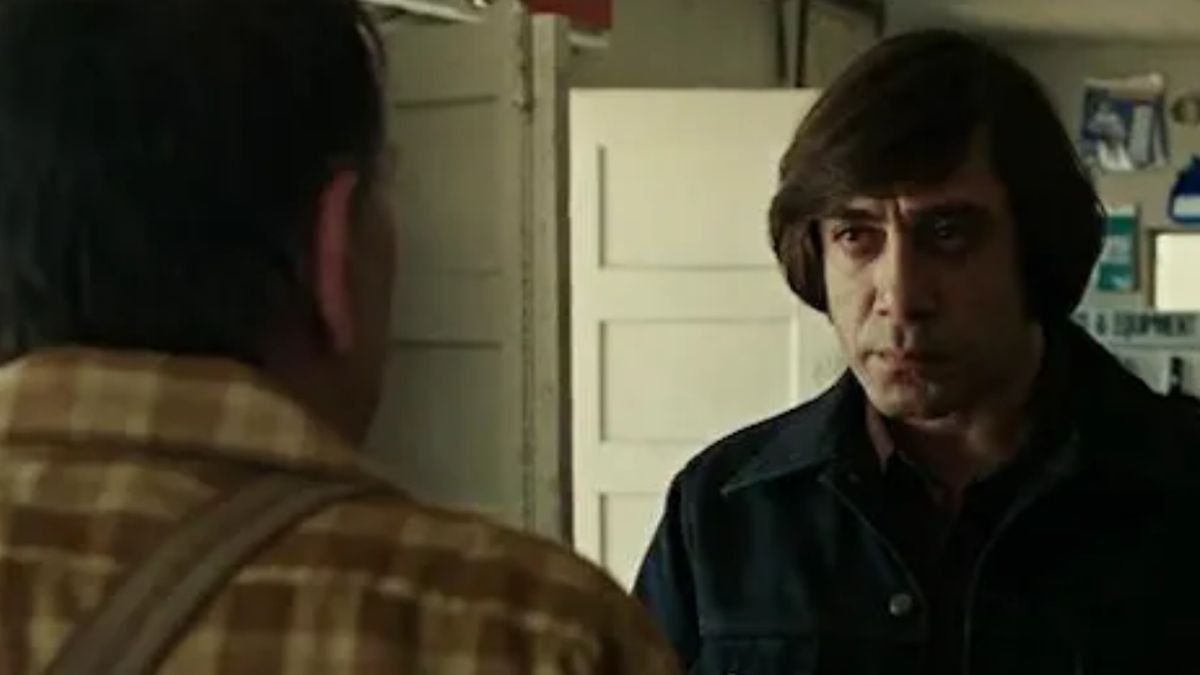
There is a moment in No Country for Old Men when a man stands behind a counter in a small gas station, his hands resting lightly on the surface, his voice almost polite. Across from him, the proprietor shifts uneasily. Outside, the Texas landscape is wide and indifferent. Inside, the air tightens.
Nothing explodes.
No music swells.
No one raises their voice.
And yet the tension is unbearable.
The coin toss scene is often remembered for its philosophical undertones, for its meditation on chance and fate. But what makes it truly devastating is not what Anton Chigurh says. It is what he does not say. It is the withholding. The silence between phrases. The way the conversation feels like it is missing pieces, and those missing pieces are what terrify us.
In scene design, silence is not absence. It is pressure.
Establishing the craft lens: withholding as escalation
Writers often fear quiet. Dialogue feels safe. Explanations feel productive. Characters speaking gives the illusion of momentum. But silence, when placed deliberately, can do something dialogue cannot.
It makes the audience lean forward.
In the coin toss scene, language is sparse. Chigurh asks questions that seem casual. The shopkeeper answers in simple, practical terms. They discuss where he is from. How long he has been married. Whether he married into money. The conversation is almost banal.
Almost.
But beneath that surface exchange, something else is happening. Chigurh is not making small talk. He is probing. He is measuring the man’s awareness. He is establishing control without announcing it.
The power of the scene lies in what is withheld. Chigurh does not state his intention. He does not threaten explicitly. He does not narrate his philosophy in grand speeches. Instead, he lets pauses hang. He lets the shopkeeper’s confusion swell in the gaps.
Silence becomes the threat.
The politeness of menace
What makes Anton Chigurh unsettling is not loud brutality. It is composure. He speaks evenly. He rarely rushes. He does not telegraph emotion.
In this scene, his restraint is surgical.
He asks the shopkeeper to call the coin toss. The man hesitates, confused. “What am I calling it for?” he asks. It is a reasonable question. Chigurh’s response is simple. “You’ve been putting it up your whole life.”
That line lands because of what surrounds it. The quiet. The stillness. The absence of dramatic cues.
I’ve found that silence often amplifies the weight of a single line. If the scene were cluttered with explanation, that sentence would feel clever. In this sparse environment, it feels fatalistic.
There is no score guiding us. No quick cuts relieving the tension. Just two men, a counter, and a coin.
The silence forces us to confront the stakes without mediation.
Withholding as character control
From a structural standpoint, the scene demonstrates how withholding information increases dominance. Chigurh knows the stakes. The shopkeeper does not. That imbalance generates tension.
But the imbalance is not declared.
It is felt.
Chigurh’s pauses are deliberate. He watches the shopkeeper squirm. He answers questions obliquely. He withholds context. Each gap in the conversation widens the emotional distance between them.
The audience, too, is denied clarity. We suspect what Chigurh is capable of. We have seen his violence earlier in the film. But in this moment, he does not announce it. He lets the possibility hover.
Possibility is often more frightening than certainty.
If he had drawn a weapon immediately, the scene would become action. By withholding, he transforms it into dread.
The economy of language
One of the most disciplined choices in the scene is its brevity. The dialogue is stripped down to essentials. There are no speeches about morality or destiny. Chigurh does not explain his worldview in full. He implies it through behavior.
The coin itself becomes a silent participant. It lands. It spins. It waits to be revealed.
That waiting is excruciating.
Silence stretches the moment between flip and reveal. The absence of sound magnifies the audience’s awareness of consequence. We understand, perhaps more clearly than the shopkeeper does, that life and death hinge on a simple call.
Heads or tails.
Two words.
But the space before those words is where the scene lives.
Why silence sharpens stakes
When dialogue is removed or minimized, every remaining word carries more weight. There is no filler. No safe banter. Each exchange feels intentional.
In this scene, silence operates like negative space in visual art. It frames what remains. It directs attention. It heightens contrast.
The shopkeeper’s nervous laughter feels louder because the room is otherwise still. The slight scrape of the coin on the counter becomes ominous. Even breathing feels amplified.
I’m not entirely sure modern thrillers trust silence enough. There is often a compulsion to explain, to score, to underline meaning. But here, the restraint is what makes the scene endure.
Silence does not slow the scene.
It tightens it.
Withholding versus subtext
It is worth distinguishing silence from subtext. Subtext involves what characters mean beneath what they say. Withholding goes further. It involves what is not said at all.
Chigurh does not articulate his rules explicitly in this moment. He does not declare himself judge or executioner. He simply insists on the ritual of the coin toss.
The ritual stands in for explanation.
By refusing to explain his moral code, he becomes less human and more elemental. He appears governed by a logic that does not require justification.
The shopkeeper senses this, even if he cannot name it.
We sense it too.
And because we are denied full access to Chigurh’s reasoning, he remains opaque. Opaqueness breeds fear. Transparency would domesticate him.
Silence preserves his menace.
The scene as microcosm
The coin toss scene is not an isolated flourish. It encapsulates the film’s broader approach to tension. Violence often arrives without warning. Consequence feels arbitrary. Explanations are scarce.
The Coen brothers construct a world where silence is not empty but loaded. Characters do not narrate their intentions. They act. Or they wait.
In this environment, dialogue becomes rare currency.
When Chigurh tells the shopkeeper to “call it,” the command resonates because the scene has earned its quiet. We have sat in the tension long enough to understand that the call is not trivial.
It is existential.
Lessons for writers
If you are crafting a scene and find yourself adding lines to “clarify” stakes, pause. Ask whether the tension would increase if you removed half of them. Silence can force the audience to do interpretive work. That work creates investment.
Withholding also protects mystery. Overexplanation flattens characters. When you leave space, you allow ambiguity to breathe.
Chigurh’s power in this scene is not in elaborate rhetoric. It is in composure. In stillness. In the refusal to fill every gap.
That refusal is discipline.
And discipline, in scene design, often matters more than spectacle.
The afterimage
When the coin finally lands and the shopkeeper calls it correctly, relief floods the room. Chigurh spares him. The tension dissipates, but not entirely. The air remains charged.
The shopkeeper does not fully understand how close he came to death.
We do.
That asymmetry lingers.
A man stands in a quiet gas station. A coin rests on a counter. Outside, the landscape stretches endlessly.
Nothing has changed.
And yet everything feels altered.
Because silence, when handled with care, can make the smallest gesture feel monumental.

Additional Reading:
- What is professional screenplay coverage (and do you actually need it?)
- What is professional screenplay coverage, really?
- How to Know If Your Screenplay Concept Is Strong Enough
- Why Most Second Acts Collapse (And How Coverage Detects It)
- How Professional Readers Evaluate Character Arcs
- Is Your Script Marketable?
Indexes: