


How to create effective email newsletters: 2026 guide
You send emails. You post on social media. You update your website. But leads stay flat and customers drift away. Most small businesses know email newsletters can help, yet they struggle to create messages that actually get opened, read, and acted on. This guide walks you through every step needed to build email newsletters that drive real engagement and turn subscribers into customers, from choosing the right platform to measuring what works.
Table of Contents
- Key takeaways
- Preparing to launch your email newsletter
- Crafting engaging and effective newsletters
- Managing deliverability and list health for maximum impact
- Measuring success and optimizing your newsletter strategy
- Enhance your marketing communications with expert services
- FAQ
Key Takeaways
| Point | Details |
|---|---|
| ROI potential | Email newsletters can deliver up to $36 ROI per $1 spent with 1,000 engaged subscribers. |
| Content balance | Follow the 90/10 content rule by delivering 90 percent valuable information and only 10 percent promotional content. |
| Mobile first design | Design emails for mobile first with single column layouts and subject lines under 50 characters to boost opens. |
| Segment and automate | Segment your audience and automate campaigns for better results than standalone newsletters. |
| List hygiene | Maintain list hygiene and use double opt in to improve deliverability and engagement. |
Preparing to launch your email newsletter
Before you write a single word or hit send, you need a solid foundation. Rushing into email marketing without clear direction wastes time and burns through your audience’s patience.
Start by defining your newsletter’s purpose and audience. What specific problem does your business solve? Who needs that solution most? A bakery might target local food enthusiasts with weekly recipe tips and product highlights. A consulting firm might focus on business owners seeking operational improvements. The step-by-step process to start an email newsletter begins with this clarity because vague newsletters get ignored.
Next, choose an Email Service Provider that fits your budget and technical comfort level. Most small businesses benefit from platforms offering free tiers for starter lists:
| Platform | Free tier limit | Best for |
|---|---|---|
| Brevo | 300 emails/day | Budget-conscious starters |
| Mailchimp | 500 subscribers | Ease of use and templates |
| Flodesk | No free tier | Design-focused brands |
| ConvertKit | 1,000 subscribers (limited features) | Content creators |
Pick based on your current list size and growth projections. You can always migrate later, but switching platforms mid-campaign disrupts momentum.
Building your subscriber list requires a compelling reason for people to share their email address. Create lead magnets that solve immediate problems: a 10% discount code, exclusive industry tips, a downloadable checklist, or early access to new products. Place signup forms on your homepage, blog posts, and checkout pages. Make the value crystal clear in your form copy.
Pro Tip: Always use double opt-in confirmation. This extra step where subscribers confirm their email address ensures you build a list of real, engaged people who actually want your content. It also keeps you compliant with consent laws and protects your sender reputation.
Your welcome email sets expectations for everything that follows. Send it immediately after signup. Tell subscribers what they’ll receive, how often, and what makes your newsletter worth their time. Include a clear link to opt-out preferences so people can adjust frequency or unsubscribe easily. Transparency builds trust and reduces complaints.
Crafting engaging and effective newsletters
Content quality determines whether subscribers open your next email or hit delete. The difference between newsletters that work and those that fail often comes down to a few specific practices.
Follow the 90/10 content rule: deliver 90% valuable information and only 10% promotional content. Your audience signed up to learn something useful, not to receive constant sales pitches. Share industry insights, practical tips, behind-the-scenes stories, or curated resources. Save the hard sell for one section near the end.
Subject lines make or break open rates. Keep them under 50 characters so they display fully on mobile devices. Use curiosity or clear value statements rather than clickbait. Compare these examples:
- Weak: “Newsletter #47”
- Better: “3 ways to cut shipping costs this month”
- Best: “Your shipping costs just dropped 30%”
The best option creates urgency and promises immediate value.
Design for mobile first since most people check email on phones. Use single-column layouts that stack cleanly on small screens. Limit images to one to three per email to keep load times fast. Break content into short paragraphs with clear headings so readers can scan quickly. Every element should guide the eye toward your call to action.
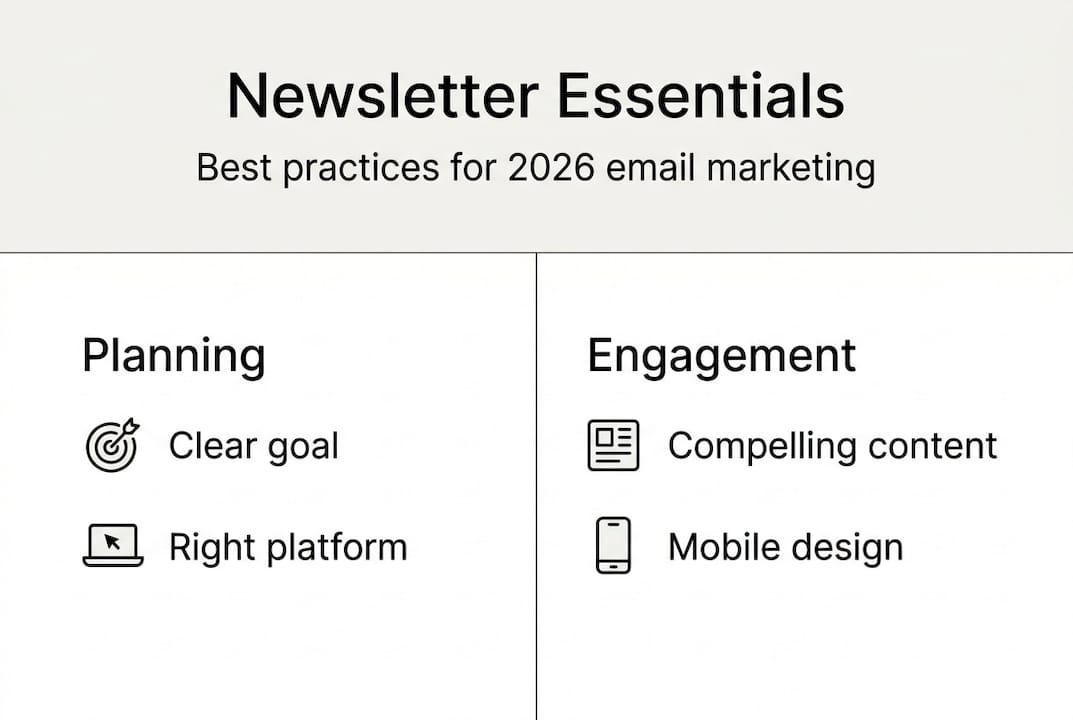
Write like you’re talking to a friend, not delivering a corporate presentation. Use “you” and “your” to speak directly to readers. Ask questions. Share brief anecdotes. This conversational tone makes your marketing communications feel personal rather than automated.
Include one primary call to action per email. Asking readers to do multiple things splits their attention and reduces overall response rates. Want them to read a blog post? Make that the focus. Need them to book a consultation? Build the entire email around that goal. Clarity drives action.
Consistency matters more than perfection. Pick a schedule you can maintain: weekly, bi-weekly, or monthly. Stick to it. Irregular sending confuses subscribers and trains them to ignore your emails. Regular contact builds anticipation and habit.
Pro Tip: Write your newsletter in a doc first, then paste it into your email platform. This workflow lets you focus on content quality without getting distracted by design tools and formatting options.
Managing deliverability and list health for maximum impact
The best-written newsletter means nothing if it lands in spam folders or gets sent to dead email addresses. Technical setup and list maintenance directly impact your results.

Email authentication protocols tell inbox providers your messages are legitimate. Implement SPF, DKIM, and DMARC to improve your deliverability rates above 96%. Most Email Service Providers handle this setup automatically, but verify it’s active in your account settings. These protocols prevent spoofing and prove you’re authorized to send from your domain.
List hygiene keeps your engagement metrics strong and your costs low. Every quarter, remove subscribers who haven’t opened or clicked in six months. Yes, this shrinks your total list size. But engaged subscribers drive revenue while inactive ones drag down your sender reputation and inflate your monthly costs.
| List health practice | Impact | Frequency |
|---|---|---|
| Remove hard bounces | Protects sender reputation | Immediately after each send |
| Purge inactive subscribers | Improves engagement rates | Quarterly |
| Re-engagement campaign | Recovers interested subscribers | Before purging |
| Update opt-out preferences | Reduces complaints | Ongoing |
Segmentation transforms generic blasts into relevant messages. Divide your list based on purchase history, engagement level, location, or interests. A clothing retailer might separate men’s and women’s product subscribers. A consultant might segment by industry or company size. Targeted content gets higher open rates and click-throughs than one-size-fits-all emails.
Lifecycle automation outperforms standalone newsletters by delivering timely, relevant content triggered by specific actions. Set up these essential sequences:
- Welcome series for new subscribers
- Abandoned cart reminders for e-commerce
- Post-purchase follow-ups
- Re-engagement campaigns for inactive subscribers
- Birthday or anniversary messages
These automated emails generate three times more revenue than regular newsletters because they reach people at exactly the right moment.
Avoid over-promotion at all costs. Sending too many sales-focused emails erodes trust and spikes unsubscribe rates. Keep unsubscribes below 0.2% by maintaining that 90/10 value-to-promotion ratio. If you need to send multiple promotional emails during a sale period, warn subscribers in advance and give them frequency options through your marketing communications preferences.
Pro Tip: Send a re-engagement email to subscribers who haven’t interacted in 90 days before removing them. Offer a compelling reason to stay subscribed or an easy unsubscribe option. This final outreach often recovers 10 to 15% of inactive subscribers while cleaning out the rest.
Measuring success and optimizing your newsletter strategy
Data tells you what’s working and what needs fixing. Without tracking the right metrics, you’re guessing instead of improving.
Understand industry benchmarks to set realistic goals. For small business lists under 10,000 subscribers, expect open rates between 27% and 42% and click-through rates between 2% and 8%. Your numbers will vary based on industry, list quality, and content relevance. Track your own performance over time rather than obsessing over hitting exact benchmark numbers.
Focus on metrics that predict revenue:
- Click-through rate shows how many people took action on your content
- Conversion rate tracks how many clicks turned into desired outcomes
- Revenue per email measures direct financial impact
- Unsubscribe rate indicates content relevance and frequency issues
Open rates matter less than they used to because privacy features on Apple devices automatically pre-load images, inflating open counts without actual human engagement. Use opens as a directional indicator but prioritize clicks and conversions for optimization decisions.
A/B testing reveals what resonates with your specific audience. Test one variable at a time:
- Subject line variations
- Send times and days
- Content length
- Image placement
- Call to action wording
- Personalization elements
Run each test on a segment of your list, measure results, then apply the winner to everyone else. Small improvements compound over time.
AI tools help analyze patterns and suggest optimizations, but keep a human in the loop. Use AI for data analysis, subject line generation, and content suggestions. Then edit everything for brand voice, accuracy, and relevance. Automated content without human judgment feels generic and misses nuance.
Compare newsletter performance against automated lifecycle emails to understand where to invest your effort:
| Metric | Static newsletters | Lifecycle automation |
|---|---|---|
| Average open rate | 25-35% | 45-60% |
| Click-through rate | 2-5% | 8-15% |
| Revenue per send | Low | 3x higher |
| Time investment | High per send | High setup, low ongoing |
This comparison shows why successful email strategies combine both approaches rather than relying solely on newsletters.
Optimize continuously by following this cycle: monitor key performance indicators weekly, experiment with one change per campaign, clean your list quarterly, and refine segmentation based on engagement patterns. Small, consistent improvements beat occasional major overhauls.
Regular analysis of your marketing communications performance ensures you’re not just sending emails but actually connecting with your audience in ways that drive business results.
Enhance your marketing communications with expert services
Building effective email newsletters takes time, testing, and strategic thinking. You handle the business expertise. Let someone else handle the communication strategy.
Stonington Media offers marketing communications services designed specifically for small businesses that know their message isn’t working but aren’t sure why. We identify where your email outreach breaks down and fix it with clear, structured messaging that guides subscribers toward action. From content strategy and list segmentation to compliance guidance and performance optimization, we help you turn email attention into actual customers.
Whether you need a complete content, leads or email strategy overhaul or targeted improvements to existing campaigns, our productized services deliver practical solutions with clear deliverables. We also ensure your opt-out preferences and consent practices meet current regulations while maintaining subscriber trust. Learn how we can fix your website.
FAQ
What is the ideal frequency for sending email newsletters?
Send newsletters consistently on a weekly or bi-weekly schedule to maintain engagement without overwhelming subscribers. Pick a frequency you can sustain long-term and stick to it so readers know when to expect your content. Irregular sending trains people to ignore your emails, while daily messages lead to unsubscribes.
How can I improve email deliverability and avoid spam filters?
Implement SPF, DKIM, and DMARC authentication protocols through your Email Service Provider to prove your messages are legitimate. Regularly clean your list by removing subscribers who haven’t engaged in six months. Avoid spam trigger words like “free,” “guarantee,” and excessive punctuation in subject lines.
What content should I include to keep my audience engaged?
Provide 90% valuable information like industry insights, practical tips, and relevant updates with only 10% promotional content. Use a conversational tone that speaks directly to reader needs and interests. Include one clear call to action per email so subscribers know exactly what step to take next.
How do I measure if my email newsletter is successful?
Focus on click-through rates and conversion rates rather than just open rates since privacy features inflate open counts. Compare your performance to industry benchmarks: 2 to 8% CTR for small business lists. Track revenue per email and unsubscribe rates below 0.2% to gauge overall health and adjust your strategy based on trends over time.
Recommended


Additional Reading:
- What is professional screenplay coverage (and do you actually need it?)
- What is professional screenplay coverage, really?
- How to Know If Your Screenplay Concept Is Strong Enough
- Why Most Second Acts Collapse (And How Coverage Detects It)
- How Professional Readers Evaluate Character Arcs
- Is Your Script Marketable?
Indexes: