

Articles
Learn what a script treatment is, how to structure it, and how to write one that works for both development and pitching. Practical guidance for screenwriters.
Learn proven methods to increase sales through clear website messaging. Discover lead capture tactics, copy optimization, and content-design alignment that boost conversions.
Master the complete script coverage process with this detailed guide for screenwriters. Learn preparation, analysis steps, common mistakes, and how to use feedback effectively.
Learn what search engine optimization really means for small businesses and discover practical SEO strategies that improve website visibility and conversion rates.
Most script issues aren’t about talent. They’re about habits. The strange thing about writing a screenplay is that you can do many things right and still end up with something that feels strangely flat. The [...]
Learn how to create effective email newsletters that drive engagement and generate leads for your small business with proven strategies, automation tips, and optimization techniques.
Discover why screenplay formatting standards matter for professional success. Learn how proper format ensures readability, supports production, and gets your script past gatekeepers.
Learn proven techniques to revise your screenplay systematically. Discover structured passes, feedback strategies, and modern refinement methods that elevate storytelling and character development for 2026 success.
Discover the complete script coverage process for screenwriters in 2026. Learn how professional readers evaluate scripts, what coverage reports include, and how to use feedback strategically to improve your screenplay and advance your career.
Discover how a screenwriting structure checklist clarifies your script development, compares popular models, and boosts marketability with expert tips for 2026.
Discover why sample coverage is essential for screenwriters in 2026. Learn how professional script feedback identifies weaknesses, accelerates revisions, and boosts your screenplay's marketability.
Master screenplay writing in 2026 with expert guidance on dual storylines, inciting incidents, and professional feedback to enhance your script's marketability and craft.
Discover the best script coverage services 2026, comparing 5 top products to help screenwriters enhance their scripts effectively.
Learn evidence-backed techniques for writing character traits that create conflict, enable growth, and elevate your screenplay's emotional impact in 2026.
Discover why multiple screenplay rewrites are essential for professional success. Learn structured revision strategies that refine story, character, and structure to meet competitive industry standards.
Master film script analysis with proven frameworks like Save the Cat, emotional genres, and flexible beat sheets to enhance storytelling structure and marketability.
Learn the complete screenplay coverage workflow from preparation through feedback implementation. Discover how to maximize professional evaluations and improve your script's marketability in 2026.
Discover what story development really means for screenwriters. Learn flexible frameworks, proven structures, and practical applications to strengthen your screenplay in 2026.
Learn how screenplay coverage works with real examples. See what professional script readers include, from loglines to detailed analysis.
A screenplay isn’t a novel that happens to have a lot of dialogue. It’s a technical document. A blueprint. The core parts of a screenplay—the scene heading, action lines, character name, and dialogue—are the load-bearing [...]
When people talk about stakes, they usually mean the obvious thing. What happens if the character fails? Lose the job. Lose the money. Lose the relationship. In some films, lose your life. That’s external stakes. [...]
Pitches are won or lost long before you ever walk into a room. Learning how to pitch a TV show means understanding it’s a game of preparation, not just ideas. Your success depends on a [...]
Conflict is easy to spot. A villain threatens the city. A hero chases him. Explosions. Deadlines. Chaos. But moral pressure is quieter. It isn’t just danger. It’s the moment when a character has to choose [...]
Lee Chandler does not look dramatic. That’s the first thing that matters. When we meet him in Manchester by the Sea, he is shoveling snow. Fixing toilets. Avoiding eye contact. He moves through rooms like [...]
When we first meet Daniel Plainview in There Will Be Blood, he is not a monster. He is alone in a pit. Hammering. Climbing. Bleeding. He breaks his leg and drags himself across the desert [...]
There is a moment in Marriage Story when the door slams and the air changes. Up until then, Nicole and Charlie have been circling each other with the brittle politeness of two people trying not [...]
When we first meet Clarice Starling, she is running. The woods are damp. The air is cold. She pushes herself uphill, alone, breathing hard. No music announces her. No one applauds the effort. It is [...]
The first time I watched Arrival, I thought I understood it. The second time, I realized I didn’t. By the third viewing, something shifted. Scenes I had treated as memory began to feel like premonition. [...]
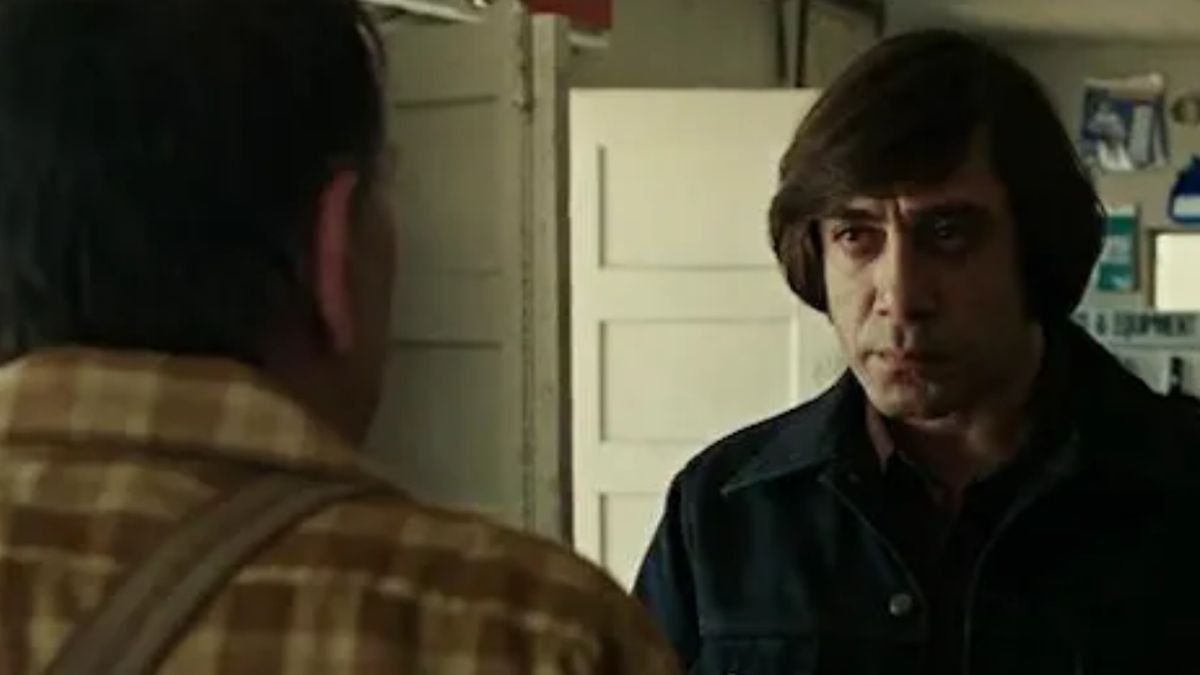
There is a moment in No Country for Old Men when a man stands behind a counter in a small gas station, his hands resting lightly on the surface, his voice almost polite. Across from [...]
There is a moment early in Lost in Translation when Charlotte sits on the edge of a hotel bed, the curtains slightly parted, the city glowing outside like circuitry. Nothing dramatic is happening. No argument. [...]
Some stories feel expansive. They widen as they unfold. New relationships appear. The emotional landscape grows richer. The Social Network does the opposite. It narrows. At first glance, the film looks like a rise story. [...]
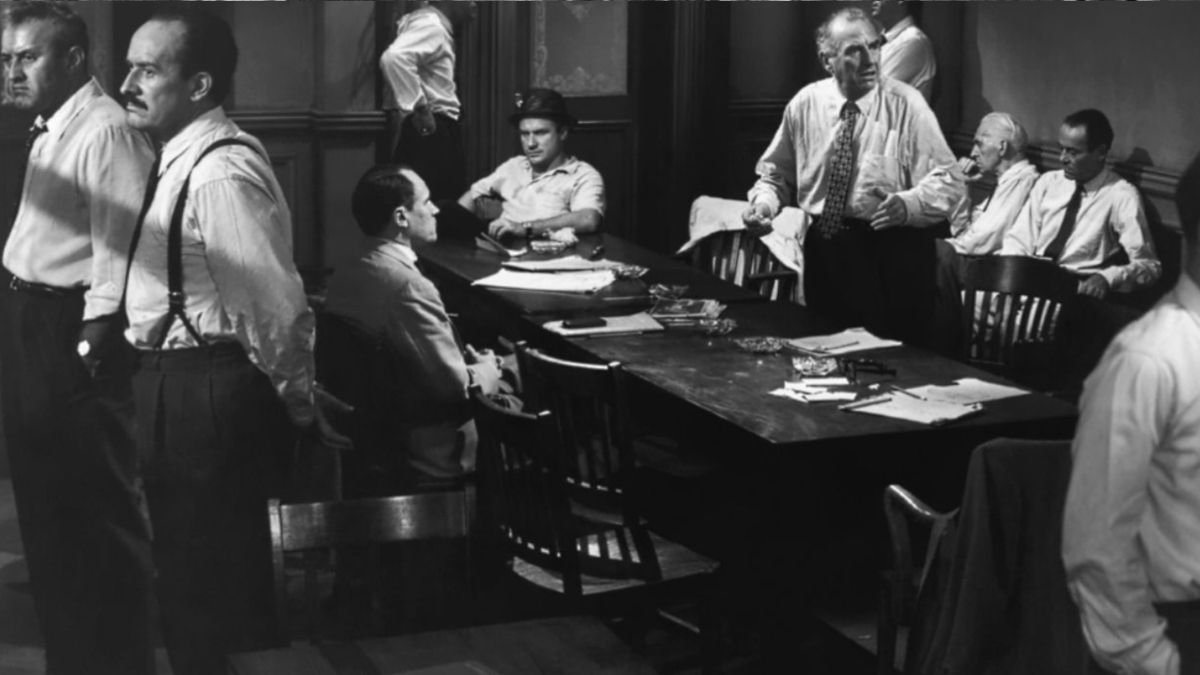
Twelve men. One room. A single table. A buzzing fan that barely works. That’s it. No car chases. No swelling score. No dramatic lighting shifts. Just heat, sweat, and a boy’s life hanging in the [...]
Some characters wear masks. Others build entire lives around them. In Fight Club, the Narrator doesn’t simply struggle with identity. He manufactures another one. And not in a subtle way. Tyler Durden isn’t a disguise. [...]
Some stories don’t surprise you with their ending. They haunt you with it. The Departed is one of those films. Long before the final elevator doors close, long before the gunshots echo in the hallway, [...]
Some scenes don’t just surprise you. They rearrange the entire story. In Gone Girl, the midpoint diary reveal doesn’t feel like a twist for the sake of cleverness. It feels like the ground shifting under [...]
Some characters are chasing the truth. Others are running from it. In Shutter Island, Teddy Daniels looks like a man investigating a mystery. He asks questions. He studies clues. He challenges authority. On the surface, [...]
Some endings shout. This one doesn’t. At the end of Call Me by Your Name, Elio sits in front of a fireplace. The room is quiet. The credits begin to roll. His face barely moves, [...]
People often think escalation means bigger explosions. Louder arguments. More chaos. But sometimes escalation is just… tightening the screws. One room. A drum kit. A conductor who doesn’t blink. If you want to understand how [...]
Ambiguity makes people nervous. We’re trained to expect answers. Stories are supposed to land cleanly. The mystery is solved. The villain is defeated. The hero understands something new. Roll credits. Then a film like Inception [...]
Subtext is one of those words that gets tossed around in screenwriting circles like everyone agrees on what it means. “Make it more subtextual.” “Don’t say it outright.” “Let it live underneath.” That’s all true. [...]
Writers love talking about flaws. Give your hero a weakness. A blind spot. Something relatable. Maybe they’re stubborn. Maybe they work too hard. Maybe they “care too much.” Those aren’t flaws. Those are personality textures. [...]
Symbolism is seductive. You introduce an image. You repeat it. You let it gather meaning. Done well, it feels organic. Invisible. It seeps into the story without announcing itself. Done poorly, it starts waving its [...]
One of the quietest craft choices you can make is where a scene begins. Not what happens in it. Not who’s in it. Where you drop the audience. Most newer writers enter too early. They [...]
A theme doesn’t usually arrive with a speech. It builds slowly. Almost invisibly. A line repeated. An image returning. A behavior that echoes across years. On its own, each moment feels small. Together, they start [...]
When people break down scenes, they usually talk about dialogue. Or tension. Or conflict. Those things matter. But underneath them, there’s something simpler running the whole machine. Goals. Every strong scene is built around someone [...]
We talk about character arcs like they’re mandatory. Someone starts flawed. Pressure hits. By the end, they’re different. That model is so baked into writing advice that when a character doesn’t transform, it can feel [...]
Theme gets confused with message all the time I see this mix-up constantly. People say “theme,” but what they really mean is message. A message sounds like advice. “Greed is bad.” “Family matters.” “Power corrupts.” [...]
What makes up a scene? People talk. Information gets passed around. Stakes are hinted at. Tension sits just under the dialogue. And still… some scenes hit hard while others just sort of float by, even [...]
Character arc has a comfortable reputation Character arc gets talked about like it’s self-improvement. A flawed person learns a lesson. They mature. They smooth out their rough edges. By the end, they’re better than they [...]
Story structures push forward. Someone wants something. Obstacles show up. Pressure rises. The plot moves toward a breaking point. Even when tension comes in waves or shifts between characters, the energy usually builds outward. Horror [...]





































Need To Talk Now?
do you have a big idea we can help with?