

Scene design, examined: competing objectives (and why equal force creates electricity)
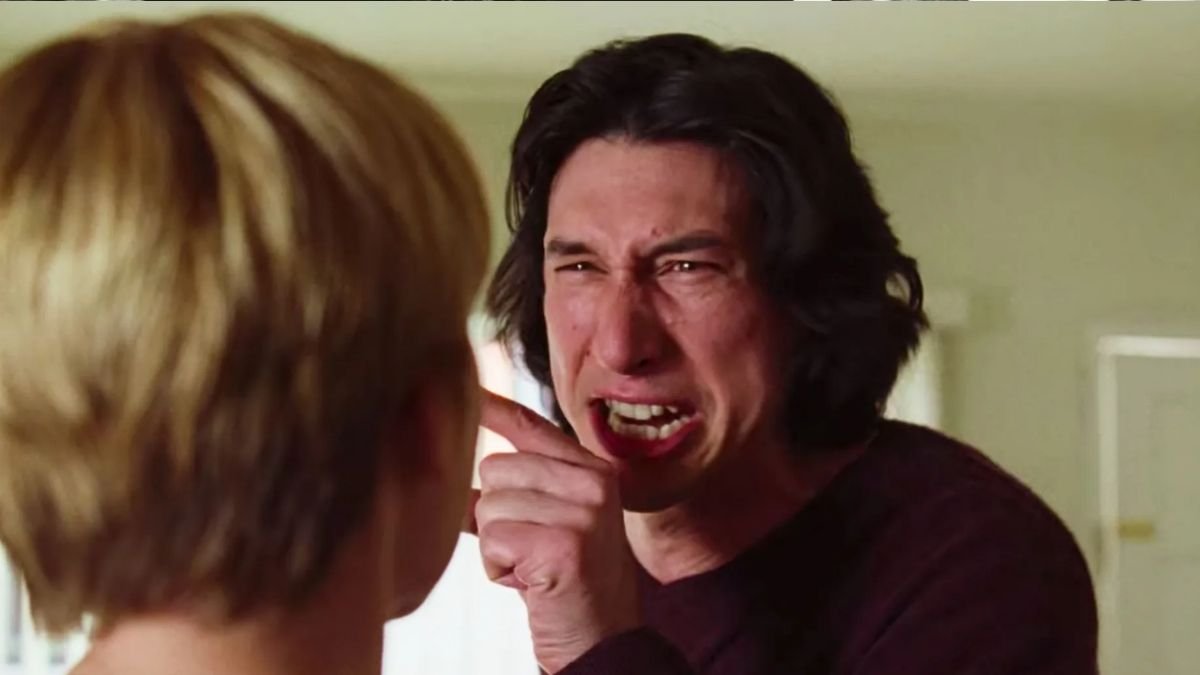
There is a moment in Marriage Story when the door slams and the air changes.
Up until then, Nicole and Charlie have been circling each other with the brittle politeness of two people trying not to fracture further than they already have. They are separated. Lawyers are involved. Papers are filed. The machinery of divorce is grinding forward with quiet efficiency.
But inside Charlie’s sparsely furnished Los Angeles apartment, something ruptures.
The scene is almost uncomfortably ordinary. A room. A hallway. Two people who once loved each other now trying to define the terms of their undoing. There are no grand gestures. No operatic score. Just voices rising, then breaking.
And that is precisely why it works.
This is a scene built not on dominance but on equivalence. Two fully realized characters enter the same emotional space with objectives that are equally urgent. That parity creates friction.
Friction creates electricity.
Establishing the craft lens: when neither side is “right”
In many dramatic confrontations, power is uneven. One character has leverage. One character has moral clarity. One character overwhelms.
The apartment argument in Marriage Story refuses that dynamic. Nicole and Charlie are both right. They are also both wrong.
That balance is what makes the scene unbearable.
Nicole wants acknowledgment. She wants Charlie to admit that their marriage slowly bent around his ambition. She wants to be seen as more than the supporting actor in his life. Charlie wants to defend himself, to insist that his intentions were never malicious. He wants to preserve some version of himself that is not villain.
Neither objective cancels the other.
They collide.
I’ve found that scenes become truly electric when both characters believe they are fighting for something essential. Not pride. Not ego. Something deeper.
In this case, identity.
The architecture of escalation
The argument does not begin at maximum volume. It creeps upward. The pacing is deliberate. There are pauses. Attempts at civility. Words that try to soften what is about to land.
Then one line lands harder than expected.
Another follows.
And suddenly the temperature spikes.
What makes this escalation effective is how grounded it feels. There are no clever rhetorical flourishes. No perfectly constructed speeches designed for applause. The dialogue stumbles. It overlaps. It veers into pettiness and then plunges into raw confession.
Nicole accuses Charlie of making her small. Charlie fires back about her own inconsistencies. Each statement feels reactive, not prewritten.
That messiness is craft.
Real arguments are not structured like debates. They are jagged. Emotional. Filled with sentences that don’t quite finish because feeling outruns language.
The film captures that imbalance without losing control.
Competing objectives in motion
In screenwriting terms, competing objectives are often discussed abstractly. Character A wants X. Character B wants Y. The scene turns when one objective blocks the other.
But here, the objectives are not tactical. They are existential.
Nicole wants validation that her sacrifices were real. Charlie wants absolution from being the sole architect of failure. As the argument intensifies, those desires sharpen. Every sentence becomes a demand for recognition.
“You didn’t love me as much as I loved you.”
That line lands like a fracture.
Charlie responds with defensiveness, but underneath it you feel panic. If he accepts her framing, he must accept that he failed her in ways he did not intend.
Intent versus impact.
That is the axis of their conflict.
Neither can relinquish their version of truth without losing something essential about themselves.
So the scene burns.
The contrast with hierarchy
If we compare this scene to something like the “not quite my tempo” sequence in Whiplash, the difference is instructive. In Whiplash, hierarchy defines the tension. Fletcher holds institutional power. Andrew reacts under pressure. The imbalance fuels humiliation.
In Marriage Story, there is no such hierarchy. Nicole and Charlie stand on equal emotional footing. Neither outranks the other. That equality creates a different kind of tension.
Balanced devastation.
Because neither is clearly stronger, every blow lands with full force. There is no shield of authority to hide behind. They are exposed to each other.
Exposure is dangerous.
Especially when love once lived in the same space.
When the argument becomes confession
At a certain point, the scene shifts from accusation to something more desperate. Charlie says he wishes Nicole were dead. The words hang in the air, ugly and shocking.
He does not mean them.
But he has said them.
This is where the craft becomes almost painful to watch. The argument has peeled away civility. What remains is grief masquerading as rage. Charlie collapses to the floor. The fight drains out of him. Nicole moves toward him instinctively.
That movement matters.
In the aftermath of devastation, compassion flickers.
The competing objectives dissolve, briefly, into shared sorrow. They are not enemies. They are two people who once promised forever and now must renegotiate everything.
The electricity subsides, leaving ache.
Why equal force sustains tension
Scenes with unequal power often resolve predictably. The dominant character wins or the underdog rebels. But when force is equal, outcome feels uncertain. Each line carries potential to tilt the balance.
In this argument, there is no winner.
That is the point.
The scene does not exist to prove one perspective correct. It exists to expose the cost of misalignment. When two intelligent, sensitive people cannot reconcile their needs, the fallout is not simple villainy. It is tragedy.
I’ve always admired how the film refuses to reduce either Nicole or Charlie to caricature. It would be easier to paint Charlie as self-absorbed or Nicole as ungrateful. Instead, it allows both to be flawed and wounded.
That generosity deepens the scene’s impact.
The choreography of space
The physical staging contributes quietly to the scene’s power. The apartment feels temporary. Sparse. In transit. They move between rooms, following each other down hallways, circling the kitchen.
The blocking mirrors emotional pursuit. Nicole retreats. Charlie follows. Then he withdraws. She advances.
It is almost dance-like, but without grace.
The proximity amplifies intensity. There is nowhere to escape. The walls feel close. The ceiling low.
Confined space intensifies competing objectives.
Just as in 12 Angry Men, restriction sharpens conflict. But here, the restriction is personal rather than civic.
What this teaches about scene design
Writers sometimes avoid writing arguments because they fear melodrama. Or they default to spectacle, believing raised voices equal drama.
This scene demonstrates that the true engine of an argument is clarity of desire. If both characters want something specific and non-negotiable, the scene will ignite naturally.
Competing objectives create motion.
Equal force creates unpredictability.
Unpredictability sustains attention.
The apartment argument works because it is anchored in character history. Every line references accumulated hurt. This is not a spontaneous explosion. It is the culmination of years of imbalance, small compromises, unspoken resentments.
When those finally surface, they do so with weight.
The quiet aftermath
After Charlie collapses, there is no triumphant resolution. Nicole kneels beside him. They hold each other. The fight is over, but nothing is fixed.
That aftermath is essential. Without it, the scene would feel theatrical. With it, the scene feels human.
Devastation can coexist with care.
Two people can wound each other and still feel tenderness.
That duality is what lingers.
The final image
Later in the film, there is a quieter moment. Charlie reads a letter Nicole once wrote about what she loved in him. His voice cracks slightly. He absorbs the words as if rediscovering a version of himself he fears is gone.
The argument scene reverberates through that moment.
Because when two equal forces collide, the damage does not disappear when the shouting stops.
It settles.
In memory. In regret. In understanding.
And that settlement is what makes the scene feel less like spectacle and more like lived experience.



Additional Reading:
- What is professional screenplay coverage (and do you actually need it?)
- What is professional screenplay coverage, really?
- How to Know If Your Screenplay Concept Is Strong Enough
- Why Most Second Acts Collapse (And How Coverage Detects It)
- How Professional Readers Evaluate Character Arcs
- Is Your Script Marketable?
Indexes: