

Character craft, examined: dual identity (and when the mask becomes the self)
Some characters wear masks.
Others build entire lives around them.
In Fight Club, the Narrator doesn’t simply struggle with identity. He manufactures another one. And not in a subtle way. Tyler Durden isn’t a disguise. He’s a wish made flesh.
When people talk about the film, they often jump straight to the twist. The reveal. The shock of realizing the two men are one.
But that’s the least interesting part.
What matters is why Tyler had to exist in the first place.
The life that wasn’t enough
At the beginning of the film, the Narrator is hollowed out.
He has a job. A condo. Catalog furniture. Air travel routines. Everything is labeled and organized and insured. On paper, he is stable.
Inside, he is dissolving.
Insomnia becomes his first fracture. He can’t sleep because he can’t rest inside his own life. His body refuses to shut down because his mind has nowhere to go. He attends support groups not because he is sick, but because he wants to feel something real. Grief is more authentic than his own existence.
I’ve always thought this is where the character truly splits. Not at the moment Tyler appears, but earlier, when he realizes the world he bought into doesn’t nourish him.
Tyler is born from hunger.
Tyler as embodied desire
Tyler Durden is everything the Narrator believes he is not.
Confident. Physical. Unapologetic. Free from consumer identity. A man who punches first and explains later.
But here’s the craft insight that fascinates me: Tyler doesn’t just represent rebellion. He represents suppressed desire made visible.
The Narrator cannot express anger at his job. So Tyler burns the system down.
He cannot admit his attraction to chaos. So Tyler organizes it.
He cannot say, out loud, that he wants to be admired. So Tyler commands rooms.
This isn’t a random personality fracture. It’s strategic externalization.
When we suppress parts of ourselves long enough, stories sometimes literalize the split. Instead of a quiet internal conflict, the film gives us two bodies occupying the same psyche.
That’s not gimmick. That’s metaphor in motion.
When the mask takes control
At first, Tyler feels like an escape hatch.
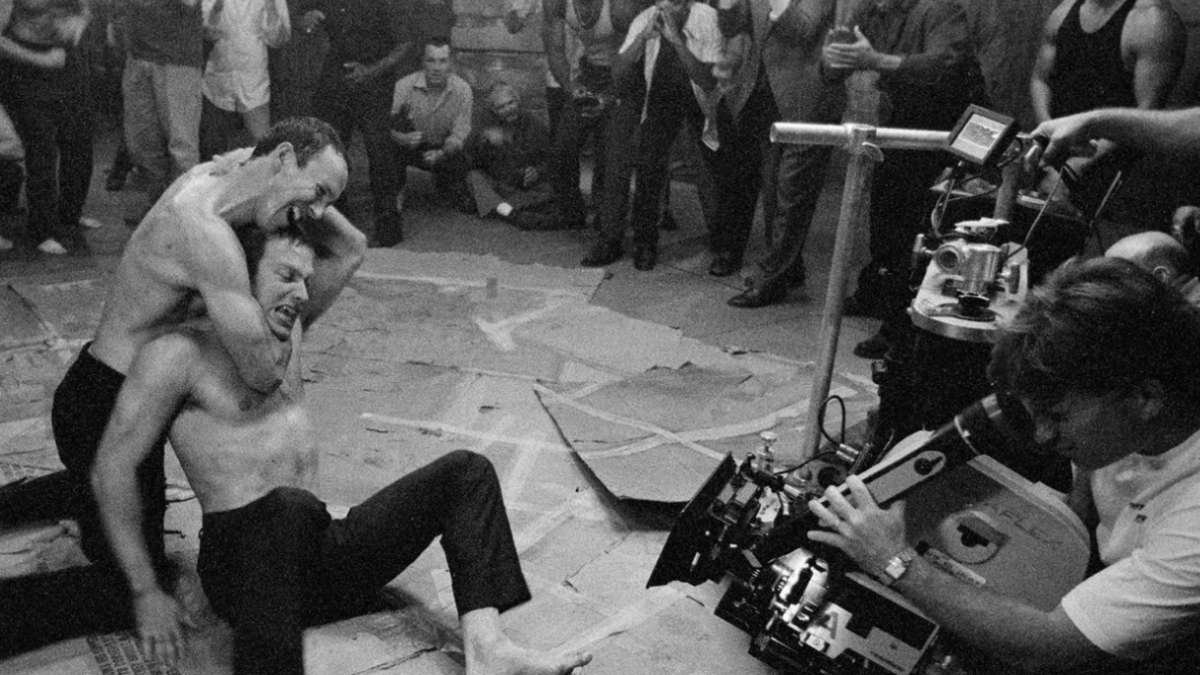
Fight Club begins as a pressure valve. Men punching each other in basements to feel alive. It seems almost therapeutic in its simplicity. Pain clarifies. Blood confirms existence.
But Tyler doesn’t stay contained.
He escalates. He organizes. He turns rebellion into structure. Project Mayhem isn’t about personal catharsis. It’s about ideological dominance.
And here’s where the arc tightens.
The Narrator believes he created Tyler.
But as Tyler grows, the Narrator shrinks.
That’s the danger of dual identity in fiction. The mask begins as protection. Then it becomes power. Eventually, it demands autonomy.
I’m not entirely sure there’s a clean line where the Narrator “loses control.” It feels gradual. Each time he yields to Tyler’s logic, he reinforces him. Each time he admires him, he strengthens him.
Desire feeds the alter.
Identity as structural engine
What makes Fight Club work structurally is that the dual identity isn’t a late-game trick.
It drives the story.
The early scenes plant it. The disorientation. The unreliable memory. The strange gaps in time. The moments where people recognize Tyler before the Narrator does.
All of it builds toward the reveal, yes. But the reveal isn’t the purpose. It’s confirmation.
The film isn’t asking, “Did you see this coming?”
It’s asking, “What part of you would do the same?”
That’s what lingers.
The collapse of illusion
When the Narrator realizes Tyler is him, the reaction isn’t triumph. It’s horror.
Because he understands something devastating.
He didn’t just invent a friend.
He authorized destruction.
Tyler is not a foreign invader. He’s permission. Permission to abandon restraint. Permission to hurt. Permission to burn.
And when that permission takes physical form, it feels unstoppable.
The final act becomes a struggle not against an enemy, but against self-created momentum. The Narrator must dismantle the version of himself he once admired.
That’s not growth.
That’s reckoning.
What dual identity reveals about character craft
Dual identity stories work best when the split exposes truth rather than conceals it.
Tyler isn’t a random alternate personality. He is a concentrated form of the Narrator’s dissatisfaction. His anger. His craving for authenticity. His resentment of a world that feels plastic.
If you strip away the violence and spectacle, what remains is painfully human.
A man who cannot integrate his contradictions.
So he divides.
I’ve found that characters fracture when they cannot reconcile competing selves. The professional versus the rebel. The polite partner versus the furious child. The consumer versus the critic.
In Fight Club, that fracture becomes literal.
And once the mask hardens into a separate identity, it demands obedience.
The real horror isn’t that Tyler exists.
It’s that he was necessary.
And when the Narrator finally shoots himself to silence Tyler, the act feels less like victory and more like integration through trauma.
He doesn’t destroy his shadow.
He absorbs it.
The buildings fall. The skyline collapses.
But what truly shifts is interior.
A man who tried to escape himself finally faces the parts he tried to exile.
That’s dual identity at its most unsettling.
Not twist.
Truth.



Additional Reading:
- What is professional screenplay coverage (and do you actually need it?)
- What is professional screenplay coverage, really?
- How to Know If Your Screenplay Concept Is Strong Enough
- Why Most Second Acts Collapse (And How Coverage Detects It)
- How Professional Readers Evaluate Character Arcs
- Is Your Script Marketable?
Indexes: