

Theme, examined: symbolism (and when it becomes too obvious)
Symbolism is seductive.
You introduce an image. You repeat it. You let it gather meaning. Done well, it feels organic. Invisible. It seeps into the story without announcing itself.
Done poorly, it starts waving its arms.
That’s the tightrope.
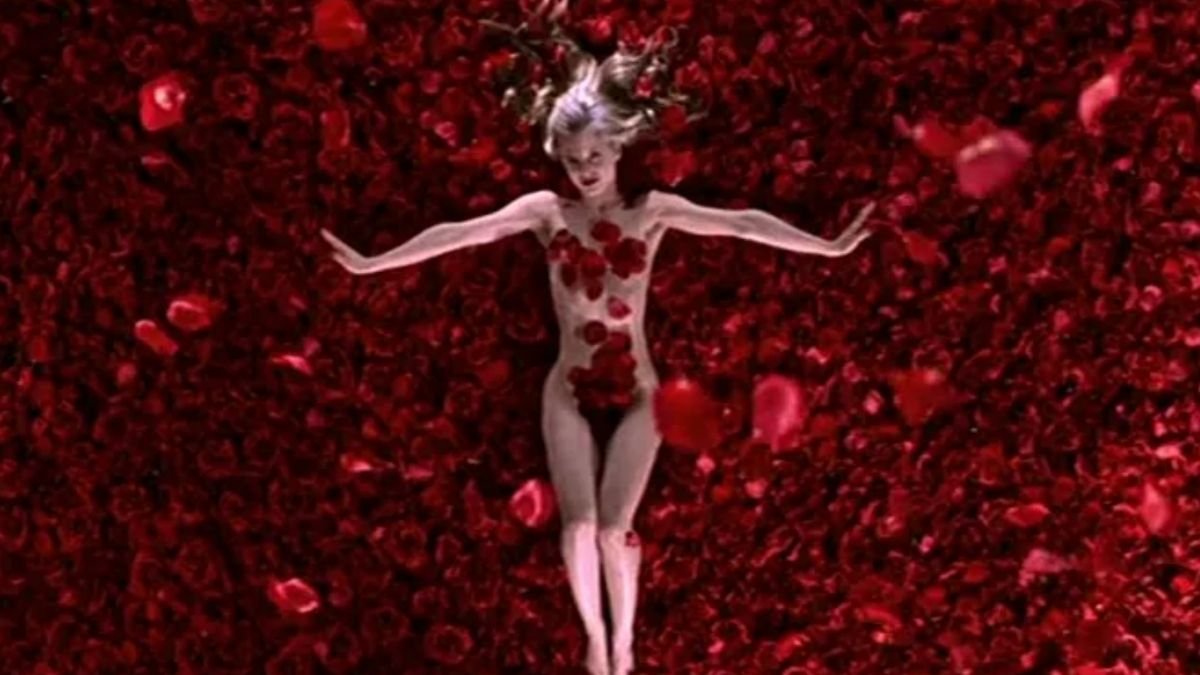
American Beauty is a fascinating case study because it walks that line in plain sight. The red rose imagery is everywhere. In vases. In fantasy sequences. In blood. In frames. It’s not subtle.
Which makes it perfect for asking a slightly uncomfortable question.
When does symbolism stop deepening theme and start shouting it?
What symbolism is supposed to do
At its best, symbolism works quietly.
An object appears in a story. It connects to a character’s desire or fear. It repeats in new contexts. Each repetition adds weight.
You don’t need to explain it.
The audience feels it.
In American Beauty, the rose is tied to Lester Burnham’s awakening. His desire. His dissatisfaction. His fantasy life. The image bleeds into the frame whenever he fixates on Angela. Petals fall over her body. The color red punctures suburban beige.
The association is clear.
Red becomes longing.
Red becomes danger.
Red becomes vitality.
The film makes sure you don’t miss it.
Lester and the hunger for something real
Lester begins the film numb.
He’s drifting through his job. His marriage is mechanical. His house is pristine but lifeless. Everything looks arranged. Controlled.
Then Angela appears, framed in red petals.
It’s not just attraction. It’s projection. Lester isn’t only drawn to her. He’s drawn to the version of himself he imagines when he looks at her. Younger. Less defeated. More alive.
The roses bloom whenever that hunger surfaces.
And here’s where it gets interesting.
The symbol isn’t subtle. It’s theatrical. Petals literally spill across fantasy sequences. The color palette leans into it hard.
I’m not entirely sure the film wanted subtlety. It feels intentional. Almost ironic. The suburb is already artificial. So the symbolism matches that heightened aesthetic.
But that choice has consequences.
When symbolism tips into excess
There’s a moment in any story where repetition can cross a line.
At first, the rose feels like a thread. Then it becomes a motif. Then it risks becoming a label.
If every emotional beat arrives wrapped in the same visual cue, the audience stops interpreting and starts decoding. Instead of feeling meaning accumulate, they register pattern.
Red equals desire.
Red equals blood.
Red equals exposure.
The equation becomes clear.
And clarity can flatten complexity.
That doesn’t mean the symbolism fails. It means it shifts function. It becomes overt commentary rather than quiet reinforcement.
In American Beauty, the rose is almost too perfect. Too polished. Too arranged. Which, maybe, is the point.
Lester’s fantasies are glossy. Unreal. Performative. The exaggerated imagery mirrors his own distorted perception.
Still, there’s a thin line between intentional excess and visual overstatement.
The difference between symbol and signal
A symbol invites interpretation.
A signal announces meaning.
The rose in American Beauty hovers between the two.
When it appears in a vase at the dinner table, it feels integrated. When it explodes into petals during Lester’s fantasies, it leans toward signal.
But context matters.
The film itself is heightened. The narration is stylized. The tone isn’t documentary realism. It’s controlled, ironic, almost dreamlike.
So the bold symbolism fits the container.
I’ve found that symbolism tends to feel heavy-handed only when the emotional groundwork isn’t there. If the character’s internal life isn’t convincing, the symbol feels like decoration. In Lester’s case, his dissatisfaction is concrete. His midlife unraveling has texture. That gives the rose something to attach to.
It isn’t floating.
It’s rooted in character.
Moments like this are exactly the kind of choices development readers notice when evaluating a script. If you’re curious about the process, learn how screenplay coverage works.
What this reveals about theme and restraint
Symbolism works best when it trusts the audience.
Let the image breathe. Let it appear without commentary. Let it mean slightly different things each time.
But sometimes a film chooses to exaggerate.
In American Beauty, the rose becomes almost too beautiful. Too deliberate. Too curated. And that excess mirrors the artificial perfection of the suburban world it critiques.
Lester spends the film chasing an image.
By the end, the image collapses. The fantasy dissolves. What remains isn’t red petals. It’s consequence.
And maybe that’s the quiet twist.
The symbol that felt overwhelming early on fades in the face of something real.
Not because the film stopped using it.
Because Lester finally saw past it.



Additional Reading:
- What is professional screenplay coverage (and do you actually need it?)
- What is professional screenplay coverage, really?
- How to Know If Your Screenplay Concept Is Strong Enough
- Why Most Second Acts Collapse (And How Coverage Detects It)
- How Professional Readers Evaluate Character Arcs
- Is Your Script Marketable?
Indexes: