

Scene Design in Inglourious Basterds: How Goals Create Tension
When people break down scenes, they usually talk about dialogue. Or tension. Or conflict.
Those things matter.
But underneath them, there’s something simpler running the whole machine.
Goals.
Every strong scene is built around someone wanting something specific right now. Not in the movie overall. Not philosophically. In that room. In that moment.
And tension doesn’t come from shouting.
It comes from goals colliding.
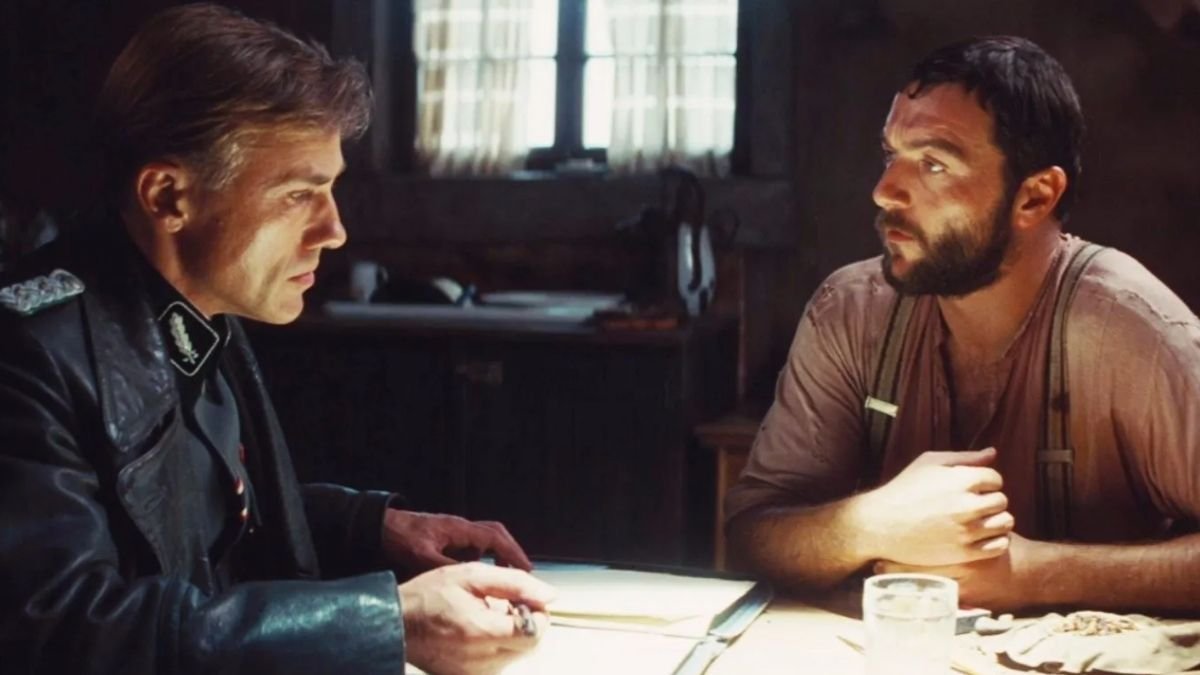
If you want to see that principle working perfectly, watch the opening farmhouse scene in Inglourious Basterds. Colonel Hans Landa walks into a dairy farmer’s home, sits down politely, and starts a conversation.
That’s it.
And it’s unbearable.
What scene goals actually are
A scene goal is basic.
What does the character want in this moment?
Not emotionally in the abstract. Not symbolically. Practically.
In the farmhouse, Landa’s objective is clear: confirm whether Jews are hiding under the floorboards.
He likely already knows. Or strongly suspects. But suspicion isn’t enough. He wants confirmation. A verbal admission.
The farmer’s goal is just as clear: protect his family and the people hidden beneath his house.
Two goals. Directly opposed.
That’s all you need.
What’s striking is that neither character states their objective out loud. No one announces their mission. They talk about milk. About livestock. About paperwork.
But the real conversation is happening underneath the surface.
How tension hides inside the goal
The scene isn’t loud.
It’s polite.
Landa is courteous. Calm. Almost pleasant. He praises the milk. He apologizes for the inconvenience. He flatters the farmer.
Which somehow makes it worse.
Because his objective never wavers.
He keeps narrowing the space. He clarifies. He reframes. He shifts languages. Every move is subtle, but it tightens the circle.
I’ve found this is where scene design either works or collapses. A character doesn’t need to explode emotionally. They just need to pursue what they want with focus.
The farmer’s strategy is delay. Stall long enough and maybe something changes. Maybe mercy appears. Maybe the soldiers leave.
But the audience feels what he feels.
Landa didn’t come for small talk.
He came to finish something.
The turn inside the scene
When a scene is built around clear goals, it will eventually pivot.
Here, the pivot comes when Landa switches to English.
On the surface, it seems considerate. He claims he doesn’t want the hidden family to understand the conversation.
But strategically, it isolates the farmer. It turns the exchange into a private negotiation. The hidden family becomes silent observers.
The pressure jumps without anyone raising their voice.
By the time Landa calmly asks for confirmation, the geometry of the scene has shifted. The farmer is no longer maintaining a facade. He’s making a choice.
When he nods toward the floor, the scene has turned.
Not because of noise.
Because the objective has been achieved.
Why this scene works
On paper, very little happens.
Two men sit at a table. They drink milk. They talk.
But every line is connected to a goal.
Landa wants confirmation. The farmer wants concealment.
Nothing is decorative. Even Landa’s charm has a function. It disarms. It stretches time. It gives the illusion of safety.
That’s what makes the scene suffocating. The clarity.
Tension doesn’t require shouting.
It requires pursuit.
What this reveals about scene design
Scenes fall flat when no one wants anything concrete in the moment. Characters discuss ideas. They exchange information. They circle around themes.
But without a present-tense objective, tension disappears.
In that farmhouse, the stakes are life and death. Of course.
But what makes the scene unforgettable isn’t just the stakes. It’s the focus. Landa knows exactly what he wants. The farmer knows exactly what he’s trying to prevent. Only one can succeed.
Scene design isn’t about spectacle.
It’s about intent.
Two people. One room. Opposed goals.
Everything else is pressure tightening, quietly, until someone breaks.
This kind of moment is exactly what readers look for when examining a script during the screenplay development process, where scenes are evaluated for clear objectives and rising tension.



Additional Reading:
- What is professional screenplay coverage (and do you actually need it?)
- What is professional screenplay coverage, really?
- How to Know If Your Screenplay Concept Is Strong Enough
- Why Most Second Acts Collapse (And How Coverage Detects It)
- How Professional Readers Evaluate Character Arcs
- Is Your Script Marketable?
Indexes: